Featured Articles
Popular Articles
-
 Dremio Blog: Open Data Insights
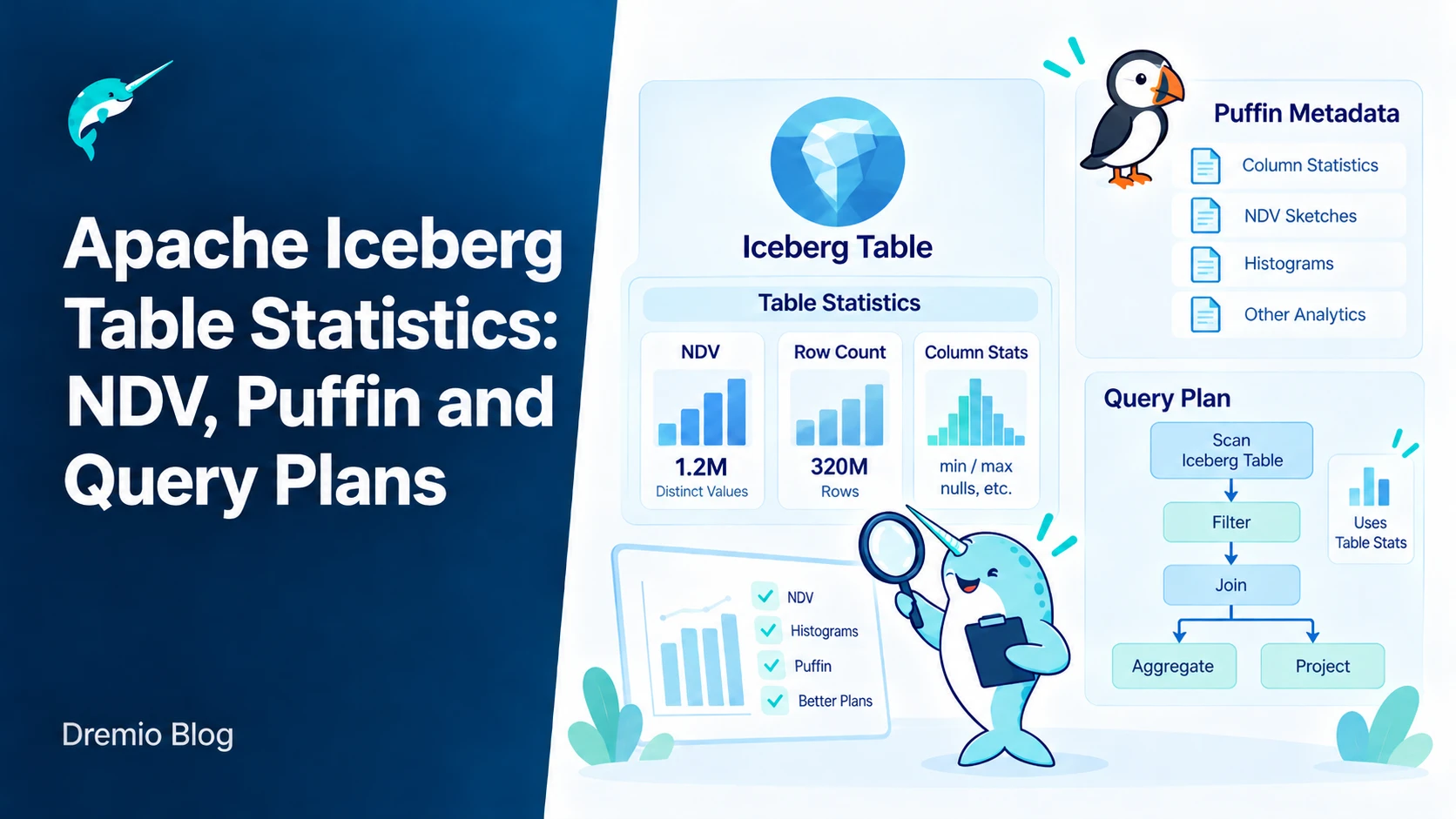
Apache Iceberg Table Statistics: NDV, Puffin and Query Plans
-
Dremio Blog: Open Data Insights
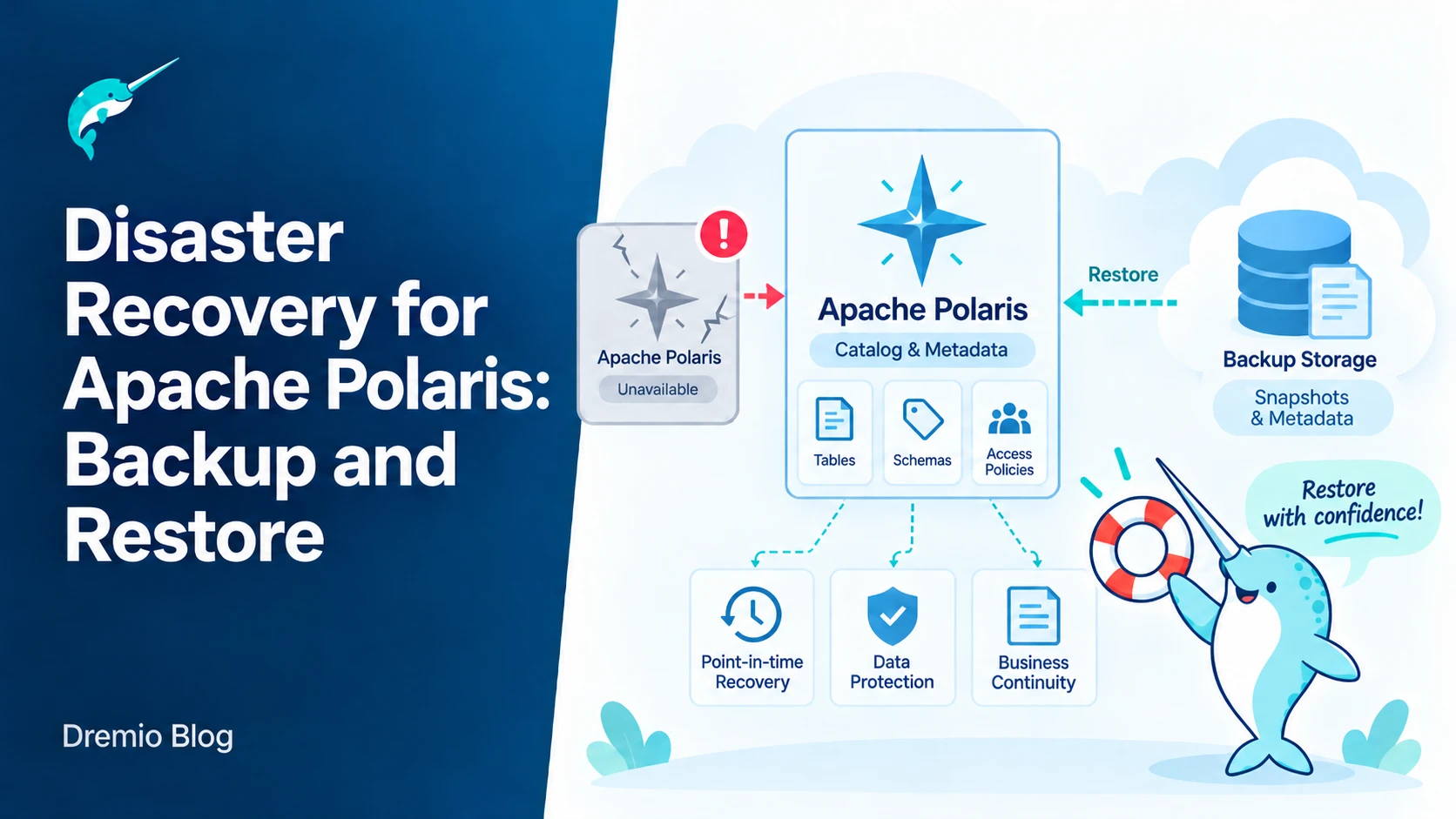
Disaster Recovery for Apache Polaris: Backup and Restore
-
Dremio Blog: Open Data Insights
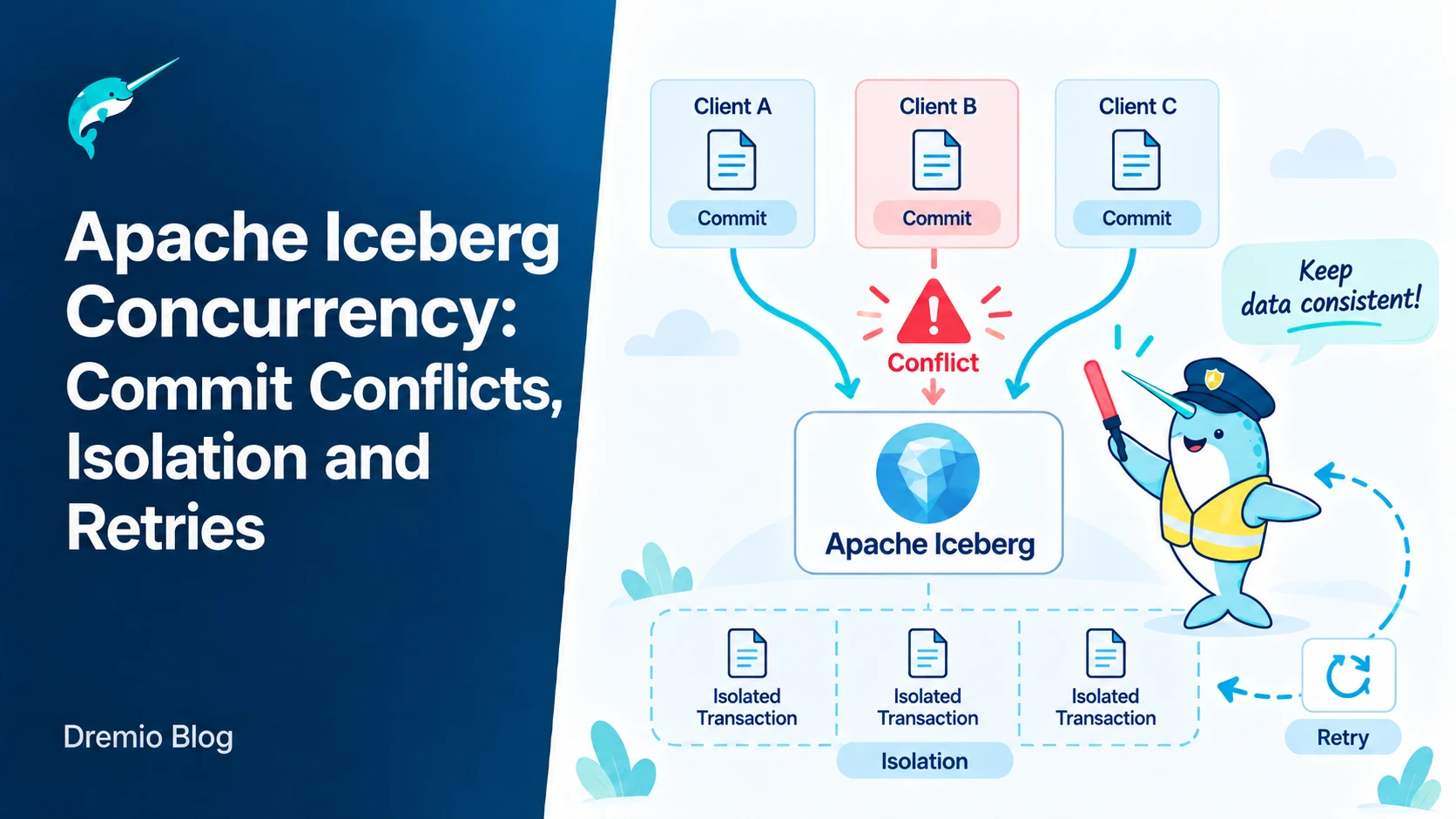
Apache Iceberg Concurrency: Commit Conflicts, Isolation and Retries
-
Dremio Blog: Open Data Insights
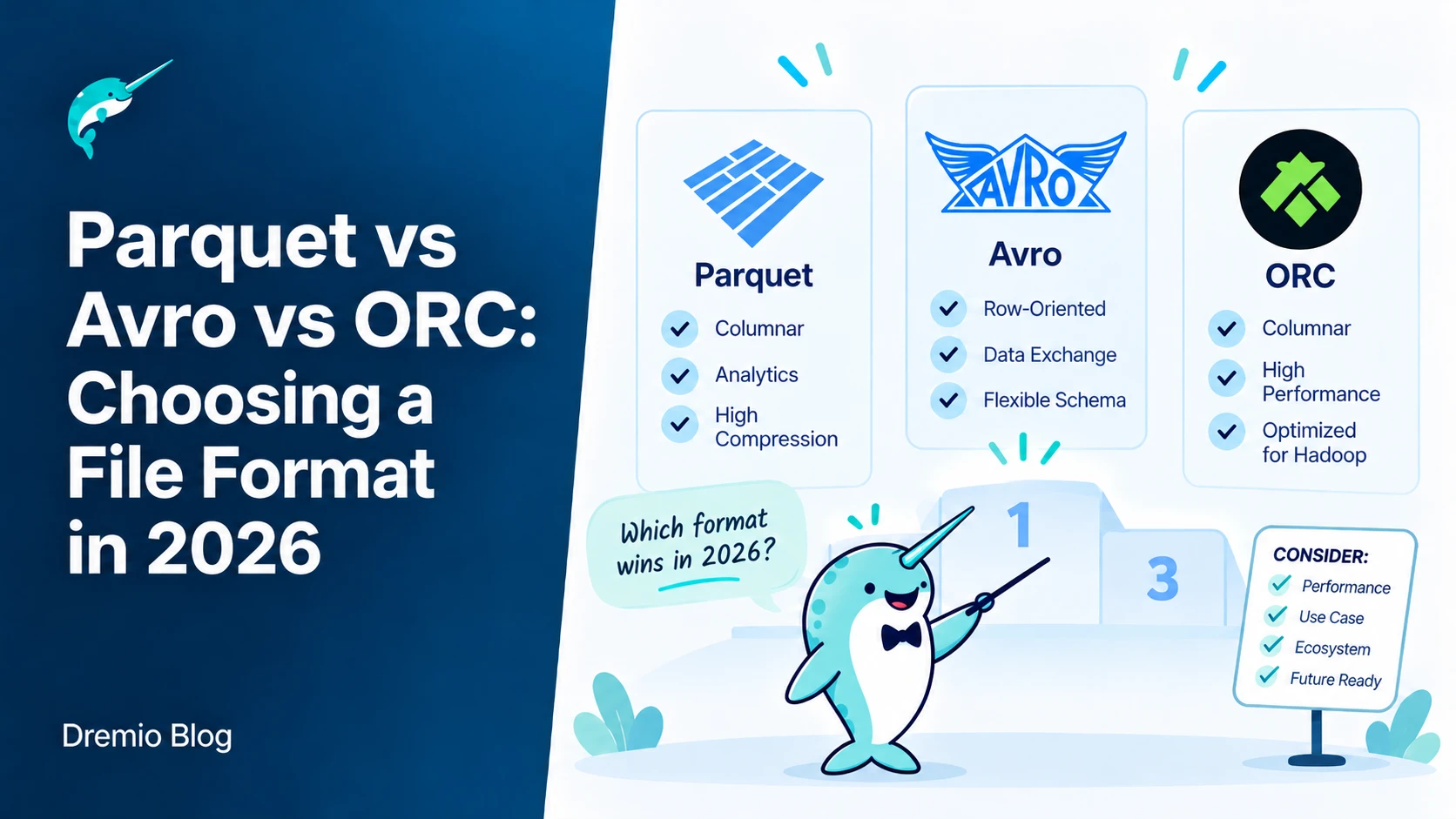
Parquet vs Avro vs ORC: Choosing a File Format in 2026
Browse All Blog Articles
-

 Dremio Blog: Open Data Insights
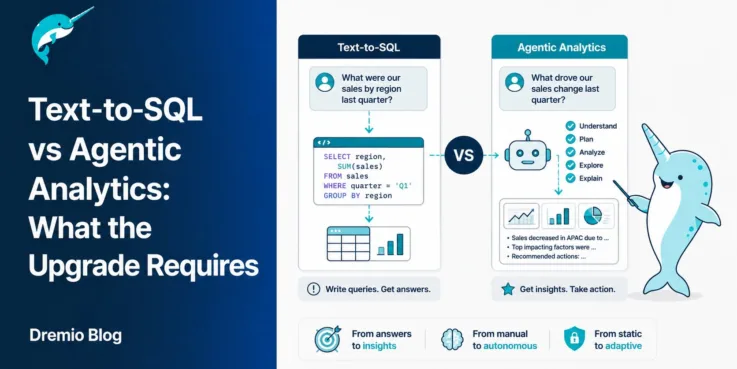
Text-to-SQL vs Agentic Analytics: What the Upgrade Requires
Text-to-SQL on a governed semantic layer is significantly more reliable than text-to-SQL on a raw production schema. The semantic layer constrains what the model can access, provides business-friendly terminology, and enforces metric definitions. The accuracy improvement is material.
-
Dremio Blog: Open Data Insights
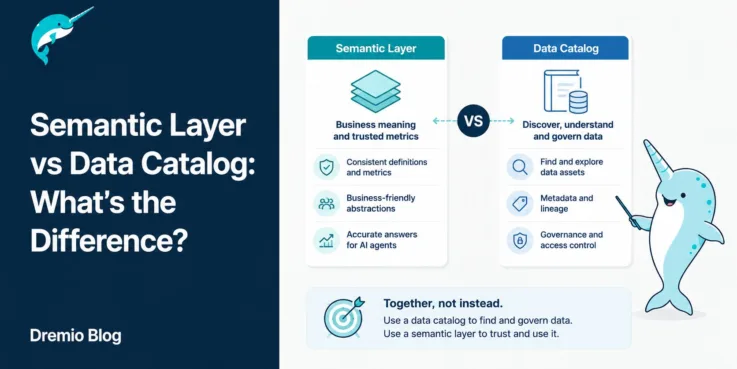
Semantic Layer vs Data Catalog: What’s the Difference?
The convergence of AI agents, open table formats, and semantic tooling is making this architecture decision more consequential than it was a few years ago. AI agents that query through ungoverned raw tables or that cannot discover what data exists are not reliable.
-
Dremio Blog: Open Data Insights
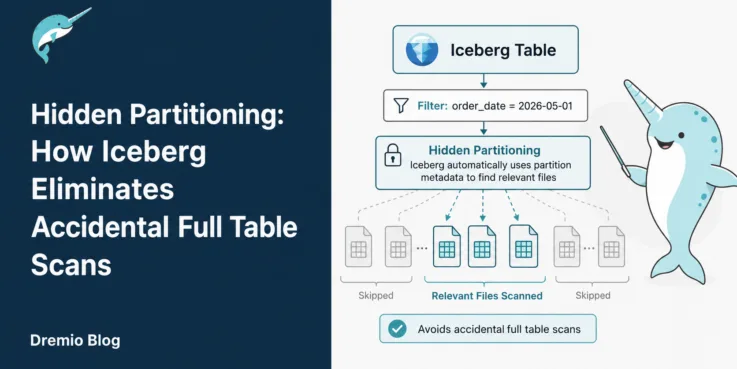
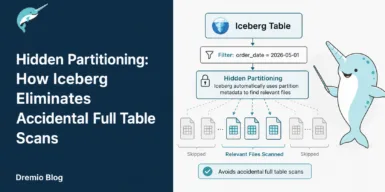
Hidden Partitioning: How Iceberg Eliminates Accidental Full Table Scans
The most expensive mistake in data lake querying is the accidental full table scan: a query that reads every file because the user did not correctly reference the partition columns. In Hive, this happens constantly. In Iceberg, it is structurally impossible because users never reference partition columns at all.
-
Dremio Blog: Various Insights
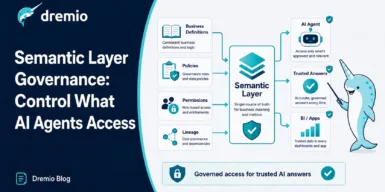
Semantic Layer Governance: Control What AI Agents Access
Semantic layer governance AI is the architectural pattern that closes this gap by enforcing data access controls structurally, at the layer every query must pass through, rather than procedurally, in workflows that agents simply skip.
-
Dremio Blog: Various Insights
Building the Hybrid Lakehouse: Storage Platforms That Work With Dremio
In data analytics, it's the query engine that gets all the attention. It's where the SQL runs and where the performance story is told. But the storage layer underneath is just as important; it's the "lake" part of the "lakehouse" after all. Choose the wrong storage infrastructure and you're facing I/O bottlenecks no query engine […]
-
Dremio Blog: Open Data Insights
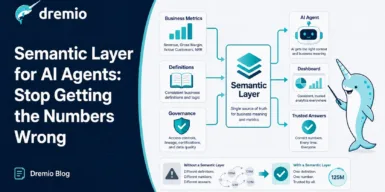
Semantic Layer for AI Agents: Stop Getting the Numbers Wrong
The reason so many agentic analytics projects stall at proof-of-concept is not the AI model. It is the absence of the infrastructure that would make the AI trustworthy on real data. A semantic layer is that infrastructure.
-
Dremio Blog: Open Data Insights
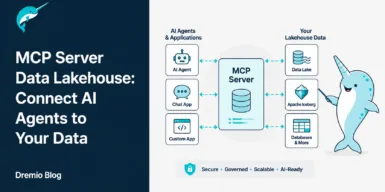
MCP Server Data Lakehouse: Connect AI Agents to Your Data
The Model Context Protocol (MCP) changes this equation. An MCP server data lakehouse setup gives any compliant AI client a single, governed, structured gateway to your data. You configure it once. Every agent that follows the spec connects automatically.
-
Dremio Blog: Open Data Insights
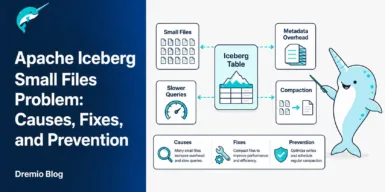
Apache Iceberg Small Files Problem: Causes, Fixes, and Prevention
Solving the Apache Iceberg small files problem requires addressing it at multiple layers. Detection comes first: use table_files() to establish a baseline and set thresholds that trigger action. Prevention comes next: configure write.target-file-size-bytes at the source and increase checkpoint intervals for streaming jobs.
-
Dremio Blog: Open Data Insights
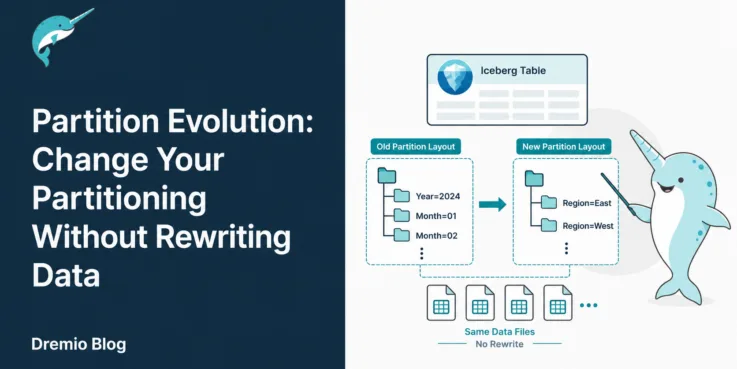
Partition Evolution: Change Your Partitioning Without Rewriting Data
Partition evolution is one of the features that makes Iceberg a safe long-term choice. It means the partitioning decision you make today is not permanent.
-
Dremio Blog: Open Data Insights
Apache Iceberg REST Catalog: What It Is and How to Use It
From that point, all engines share a consistent view of your Iceberg tables. New tables created by Spark appear in Dremio immediately. Schema changes committed by Flink are visible to PyIceberg clients without any manual sync. The catalog handles the coordination.
-
Dremio Blog: Various Insights
Governing Your Lakehouse: Data Catalog Tools That Work With Dremio
A lakehouse without governance is a liability. Sure, you can query it, but can you trust it? Analysts find tables with no owner, no description, and no clear indication of whether what they're looking at is current. Likewise, compliance teams can't demonstrate data lineage and engineers can't assess the impact of a schema change before […]
-
Dremio Blog: Open Data Insights
Apache Iceberg Partition Evolution: Change Your Partitioning Strategy Without Rewriting Data
Partition evolution is one of those features that seems minor until you need it. Then it's the difference between a two-minute metadata update and a two-day rewrite project. If you're building on Iceberg and haven't thought carefully about your partition strategy yet, the time to do that is before your table reaches 10 TB, not after.
-
Dremio Blog: Various Insights
How Dremio Keeps Every BI Tool Consistent
Business intelligence tools are where data stops being infrastructure and starts being useful. Executives review performance in dashboards, product teams track metrics in reports, and finance runs variance analysis against actuals. In each case, the value only materialises if the connection between the tool and the underlying data is fast, reliable, and consistent. Dremio connects […]
-
Dremio Blog: Open Data Insights
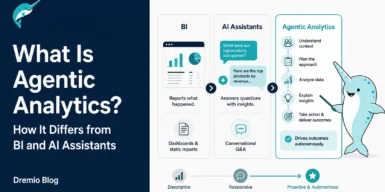
What Is Agentic Analytics? How It Differs from BI and AI Assistants
The framing that matters here: agentic analytics is not a feature you add to your existing BI stack. It is a different approach to how analytical work gets done, who does it, and at what speed.
-
Dremio Blog: Open Data Insights
Agentic Lakehouse vs Data Lakehouse: What Actually Changes
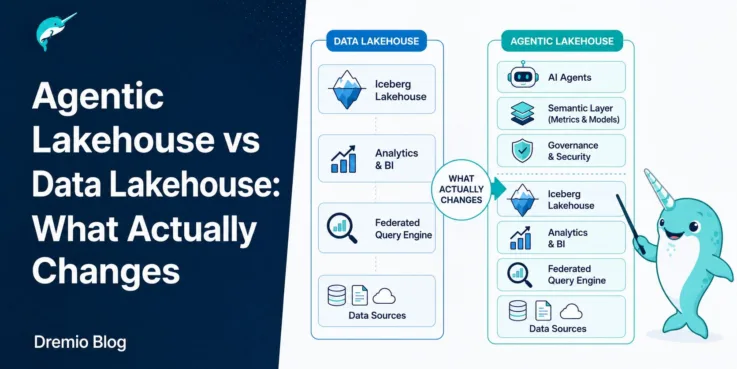
The Agentic Lakehouse is not a different architecture from your existing lakehouse. It is four additional structural layers built on top of a foundation you have likely already built: an AI Semantic Layer, Autonomous Performance, active metadata, and agent-specific interfaces.











- « Previous Page
- 1
- …
- 3
- 4
- 5
- 6
- 7
- …
- 48
- Next Page »