
Amazon Accelerates Supply Chain Decision Making by Implementing an Innovative Analytics Architecture using Dremio

Unify fragmented product, customer, and operational data, accelerate AI-driven product analytics, and activate self-service insights without warehouse cost shock, data duplication, or vendor lock-in.
Trusted by leading technology companies










BENEFITS
Dremio gives technology data teams the fastest path to trusted AI and analytics, unifying product telemetry, CRM, feature store, and operational data without duplication, ETL, or lock-in. Data platform engineers, analytics engineers, and AI agents get governed access to a single query layer across multi-cloud environments, without waiting on data engineering.

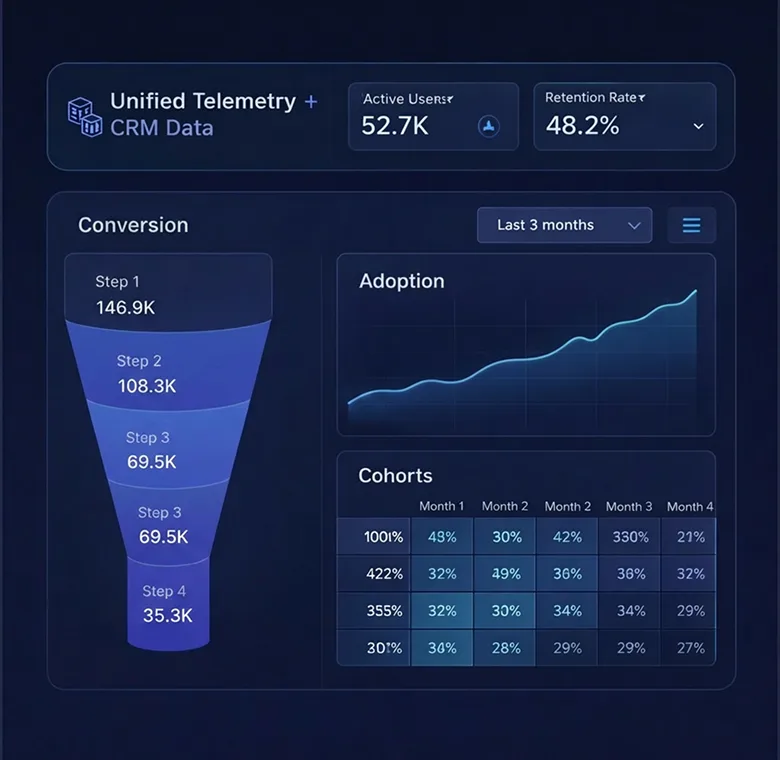
Unifies product telemetry, customer, and event data with business context to enable accurate engagement insights, churn signals, and GTM analytics, all powered by a governed semantic layer.
Query product, customer, and event data in place with zero ETL, reducing costs while enabling unified access across cloud, streaming, and CRM systems through a single SQL interface.

Enforces governed access, full lineage, and audit-ready compliance across all workloads, enabling secure data use without slowing product and engineering teams.
USE CASES
Find the use case for your team below. Dremio connects product managers, analytics engineers, ML platform leads, and AI agents to the same governed, always-current technology data foundation.
Product and data teams query petabyte-scale event telemetry, session data, and feature flags alongside CRM and support signals through a single SQL layer, without centralizing data into a warehouse copy. The AI Semantic Layer maps raw event schemas to product definitions so analysts and AI agents work from consistent, governed metrics without waiting on pipeline updates.
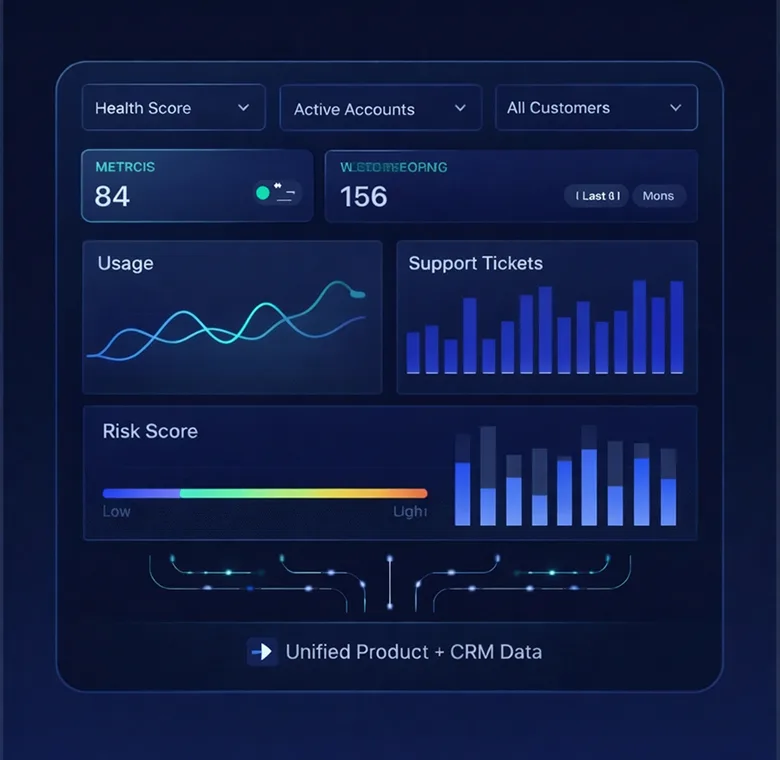
Revenue operations and customer success teams unify product usage, CRM, support tickets, and billing data for account health scoring, churn prediction, and expansion signal detection, without centralizing across SaaS data silos. Dremio federates Salesforce, Gainsight, Zendesk, and product telemetry into a single query layer so CS and GTM teams work from the same governed customer record.
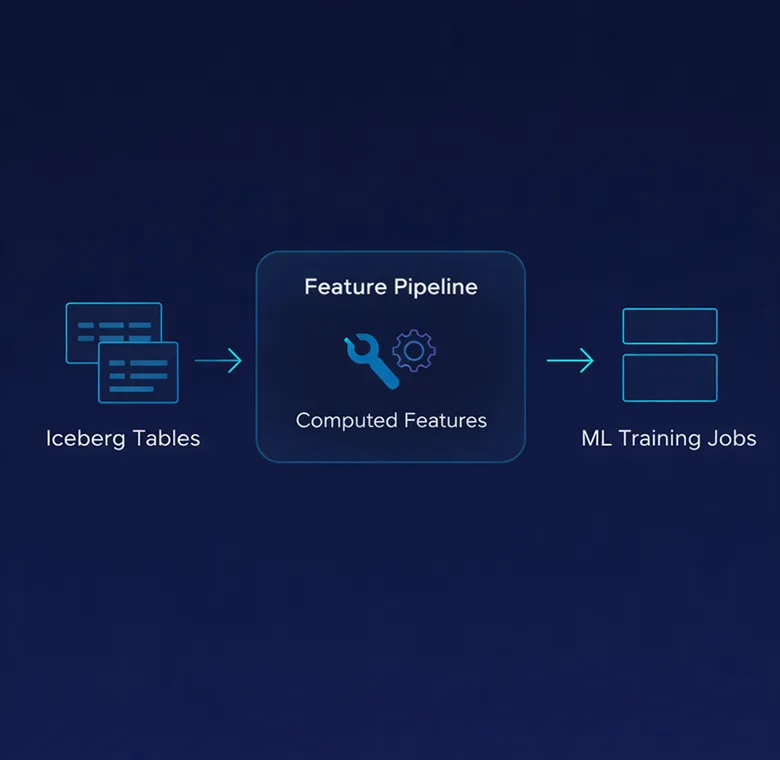
ML engineers and data scientists build and serve training datasets and feature stores directly on open Iceberg tables without extracting data into separate ML environments. Autonomous Reflections accelerate feature computation on petabyte-scale event data so model training pipelines consume fresh, governed features without duplicate storage or engineering overhead.
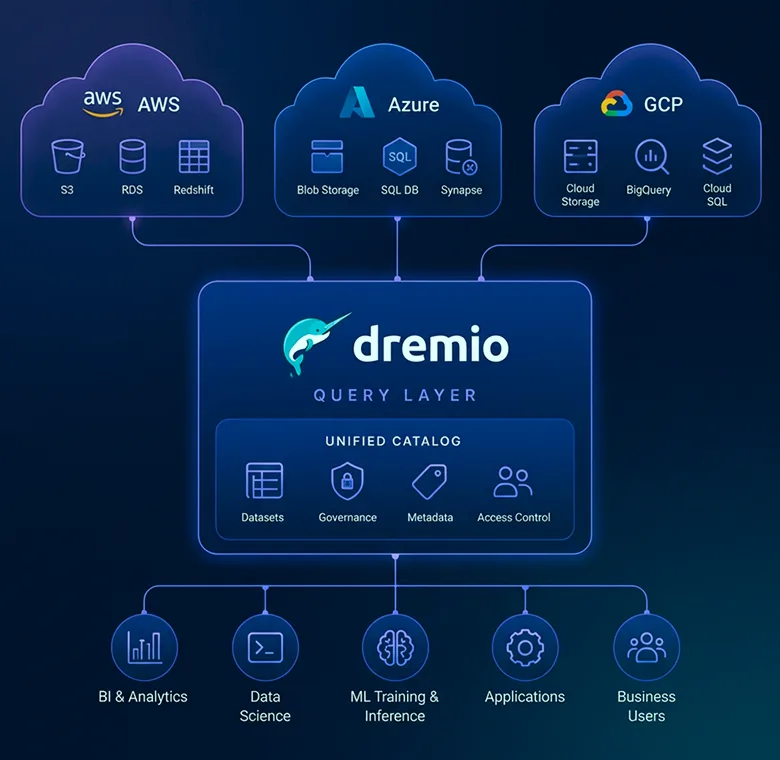
Data platform and infrastructure teams query data across AWS, Azure, and GCP environments through a single SQL interface, without centralizing into one cloud or building per-cloud ETL pipelines. Dremio’s federation layer preserves data sovereignty across cloud boundaries so engineering teams access a unified data catalog with consistent governance, regardless of where data lands.
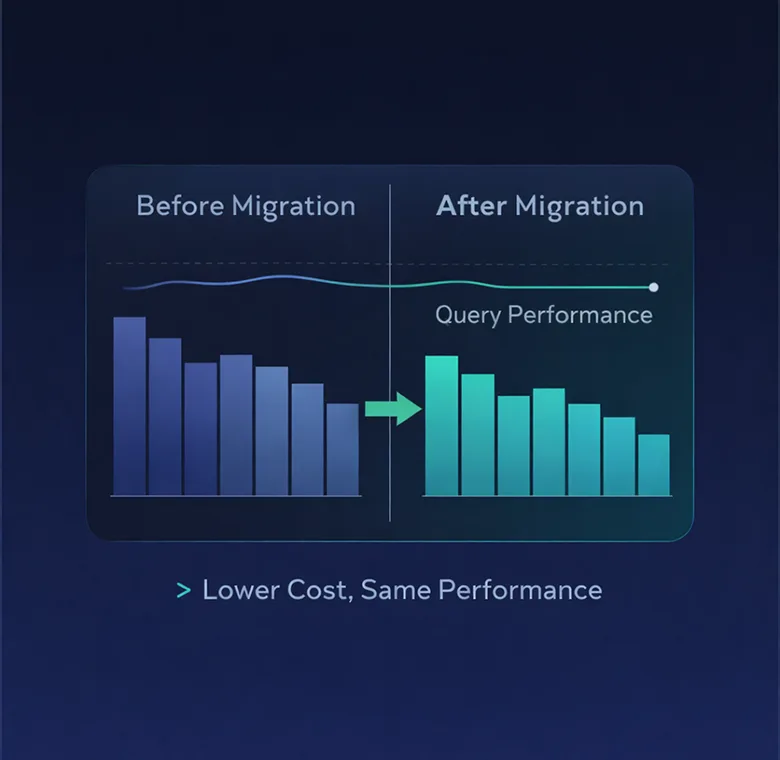
Data platform leads and architects migrate workloads from Snowflake or BigQuery to an open Iceberg lakehouse, cutting compute costs 30-60% while preserving query performance and self-service access for all existing users. Autonomous Reflections replace proprietary warehouse caching with open, portable acceleration so teams eliminate vendor lock-in without degrading analyst experience.

CUSTOMER STORIES



RELATED CONTENT
Explore our suite of products designed to help you unlock the full potential of your data platform and drive better business outcomes.

Explore how a universal semantic layer can unify your data sources, simplify analytics, and help you achieve better insights.


Dremio’s Architecture Guide explains how its lakehouse delivers scalable, cost-efficient, self-service analytics by eliminating ETL, enabling instant data access, and accelerating queries.
The investment in the semantic layer pays off not just in agent accuracy but in the reliability of every downstream workflow that depends on agent output.
FAQs
Get common questions answered about Technology Industries.
Dremio replaces expensive warehouse-compute copy jobs with federated queries that read data directly from your cloud data lake. Autonomous Reflections provide intelligent, automatic acceleration that matches or exceeds warehouse query performance without data loading costs. Technology companies using Dremio typically reduce compute spend 30-60% while maintaining or improving analyst query experience.
Yes. Dremio federates streaming event data alongside batch Iceberg, Parquet, and Delta tables through a single SQL layer, giving product and data teams current-state telemetry alongside historical data without building separate processing pipelines for each source type.
Dremio’s query layer pushes compute to where data lives across AWS S3, Azure ADLS, and GCP Cloud Storage without requiring cross-cloud data replication. Data platform teams maintain a unified Polaris Catalog across cloud environments so analysts and AI agents query a single governed namespace regardless of which cloud stores the data.
Dremio reads dbt-generated models directly and layers the AI Semantic Layer on top, adding business definitions, metric governance, and access controls without replacing your existing transformation logic. Analytics engineers keep their dbt workflow while Dremio extends the semantic layer to AI agents and self-service analysts.
Yes. Dremio connects to all major BI and analytics tools via ODBC/JDBC and Arrow Flight SQL. Analysts continue using their existing tools while Dremio governs data access, accelerates queries, and ensures every dashboard draws from the same governed semantic layer.
Dremio supports incremental migration, allowing teams to start by federating Snowflake alongside your existing data lake without a full cutover. As workloads move to open Iceberg tables, Dremio replaces Snowflake compute one use case at a time, maintaining query compatibility through ANSI SQL and preserving analyst productivity throughout the transition.


