Featured Articles
Popular Articles
-

 Dremio Blog: Open Data Insights
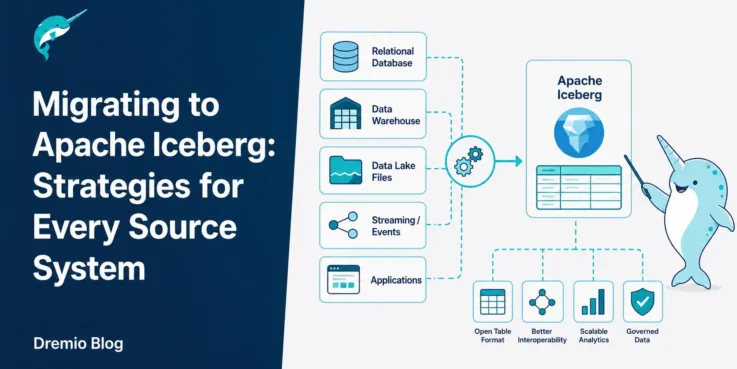
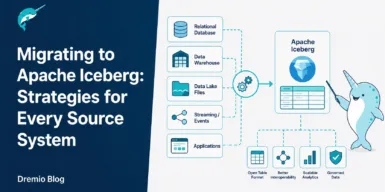
Migrating to Apache Iceberg: Strategies for Every Source System
-
Dremio Blog: Open Data Insights
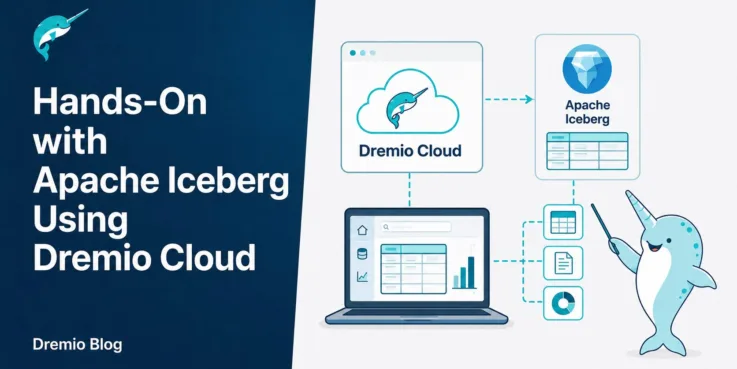
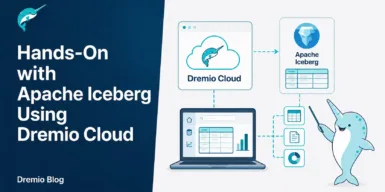
Hands-On with Apache Iceberg Using Dremio Cloud
-
Dremio Blog: Open Data Insights
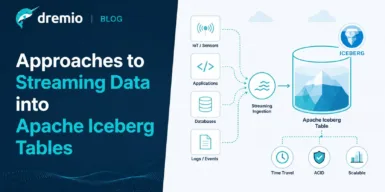
Approaches to Streaming Data into Apache Iceberg Tables
-
Dremio Blog: Open Data Insights
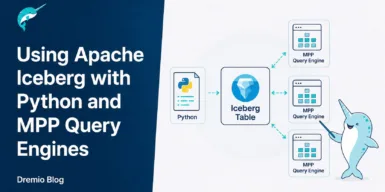
Using Apache Iceberg with Python and MPP Query Engines
Browse All Blog Articles
-
 Dremio Blog: Open Data Insights
Migrating to Apache Iceberg: Strategies for Every Source System
This is Part 15, the final article of a 15-part Apache Iceberg Masterclass. Part 14 covered hands-on Dremio Cloud. This article covers the three migration strategies and how to execute a zero-downtime migration using the view swap pattern. Most organizations do not start with Iceberg. They have years of data in Hive tables, data warehouses, CSV files, databases, […]
-
Dremio Blog: Open Data Insights
Hands-On with Apache Iceberg Using Dremio Cloud
This article is a practical walkthrough of working with Iceberg on Dremio Cloud, covering table creation, data ingestion, optimization, semantic layer construction, and AI-powered analytics.
-
Dremio Blog: Open Data Insights
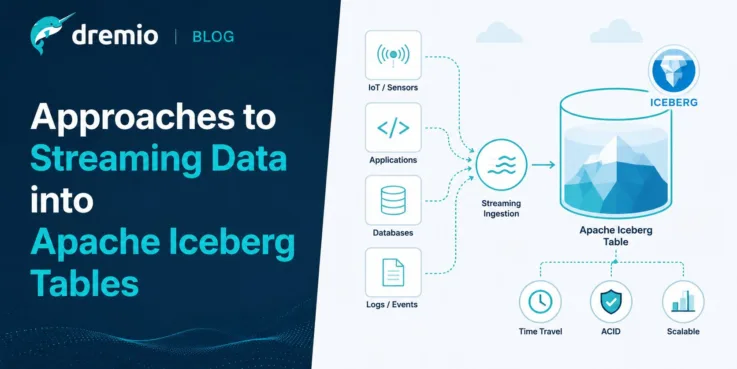
Approaches to Streaming Data into Apache Iceberg Tables
Streaming ingestion bridges this gap by committing data to Iceberg tables at regular intervals. The challenge is that frequent commits create the small file problem, and managing that trade-off between data freshness and table health is the central concern of streaming to Iceberg.
-
Dremio Blog: Open Data Insights
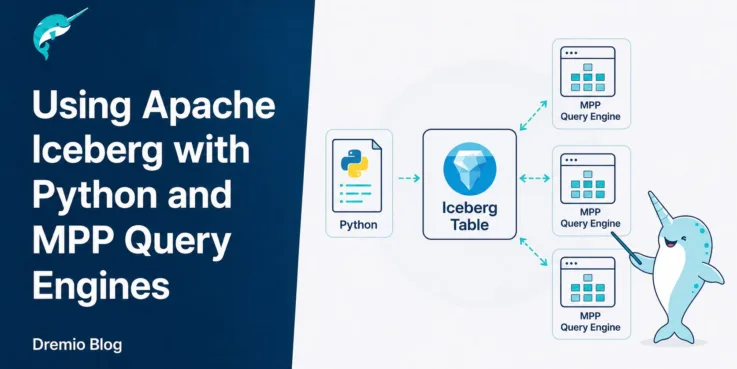
Using Apache Iceberg with Python and MPP Query Engines
This article covers the two main ways to access Iceberg data: directly from Python libraries and through MPP (massively parallel processing) query engines.
-
Dremio Blog: Various Insights
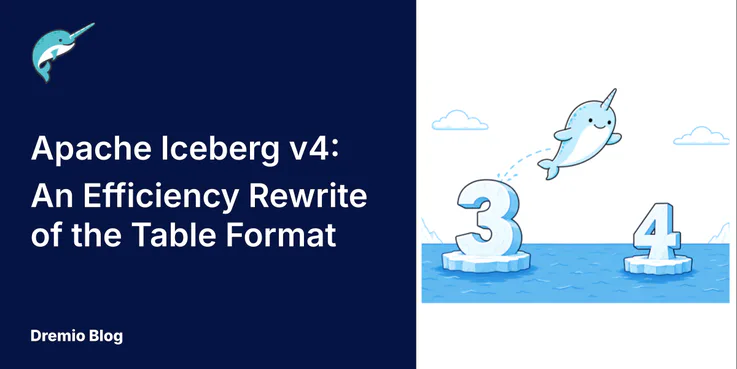
Apache Iceberg v4: An Efficiency Rewrite of the Table Format
Iceberg 1.11.0, released in May 2026, contains the full implementation of the v3 spec(ification), including features like deletion vectors, the VARIANT type, and row lineage. But what comes next? V4, obviously, as four comes after 3. However, it's still early days on the v4 spec, so we are a ways off from the next version […]
-
Dremio Blog: Open Data Insights
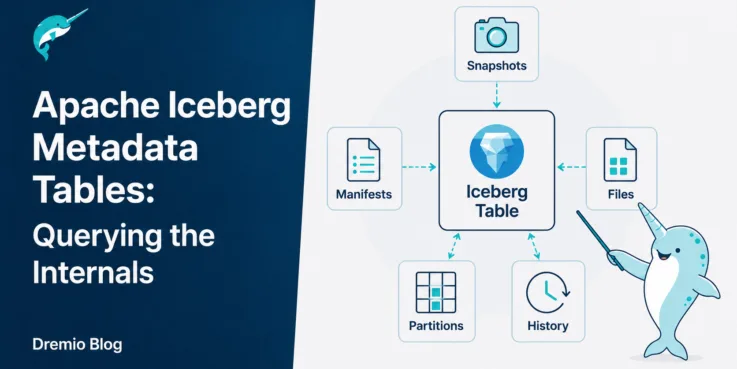
Apache Iceberg Metadata Tables: Querying the Internals
This article covers the metadata tables that let you inspect Iceberg table internals using standard SQL. Iceberg exposes its internal metadata as queryable virtual tables.
-
Dremio Blog: Open Data Insights
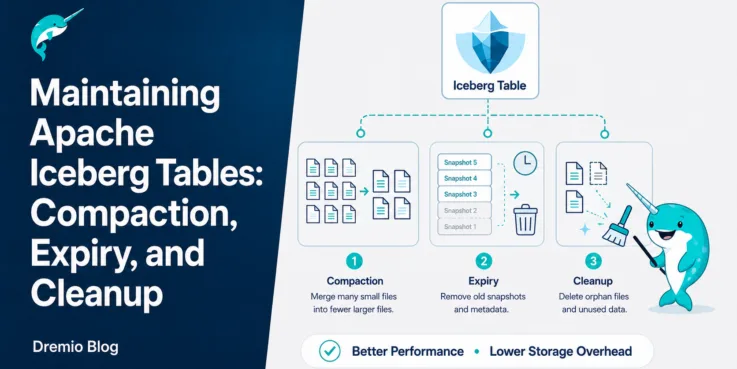
Maintaining Apache Iceberg Tables: Compaction, Expiry, and Cleanup
This article covers the four maintenance operations that keep Iceberg tables healthy and the three approaches to running them.
-
Dremio Blog: News Highlights
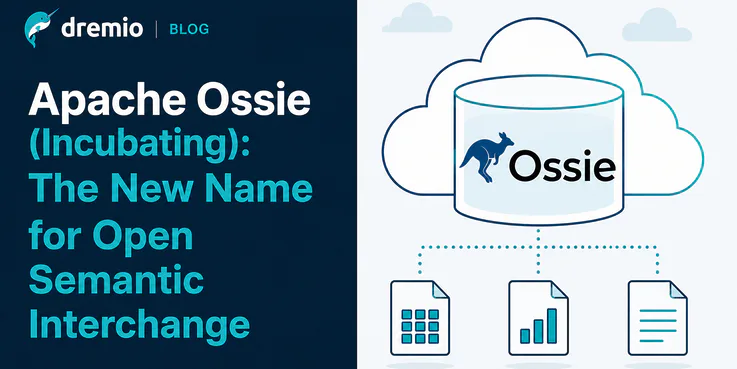
Apache Ossie (Incubating): The New Name for Open Semantic Interchange
Apache Ossie is currently undergoing incubation at The Apache Software Foundation (ASF). If you've been following the Open Semantic Interchange project — the open specification for semantic layer and ontology — there's an important update. The project has been accepted into the Apache Incubator under a new name: Apache Ossie (Incubating). The spec, the community, and […] -
Dremio Blog: Open Data Insights
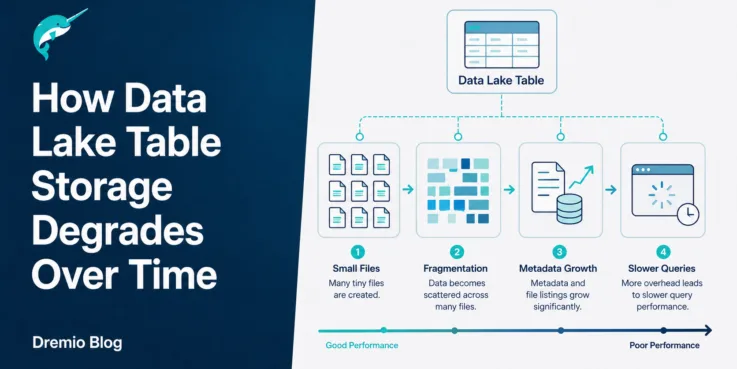
How Data Lake Table Storage Degrades Over Time
An Iceberg table that works well on day one will not work well on day 365 without maintenance. Every append, update, and delete operation adds files and metadata.
-
Dremio Blog: Various Insights
What’s The Deal With Apache Parquet?
Apache Parquet is the recommended file format used in every modern data platform, and for good reason. But what are those reasons? And would it really matter if you stuck with CSV? The short answer is "YES". The slightly longer answer is "Yes, because columns". The full answer is below, so keep on reading to […]
-
Dremio Blog: Open Data Insights
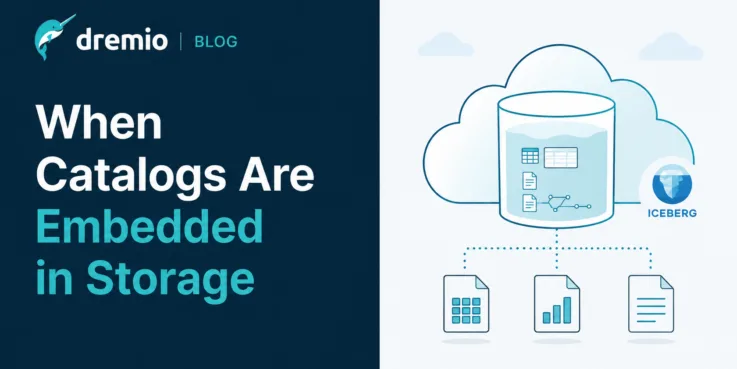
When Catalogs Are Embedded in Storage
This article examines a newer approach: embedding the catalog directly inside the storage layer. Traditional Iceberg architectures have three components: the query engine, a standalone catalog, and object storage.
-
Dremio Blog: Various Insights
The Semantic Layer: From Human Shortcut to Agent Guardrail
For most of its history, the semantic layer was considered a solved problem. You built it once, business users queried it wherever it lived, and (hopefully) everyone would agreed on what "revenue" meant. However, much like the information in your data dictionary, the popularity of the semantic layer went stale and businesses turned to new, […]
-
Dremio Blog: Various Insights
Dremio ELT: Load, Transform, and Govern Data Without Leaving the Lakehouse
Data pipelines used to require a lot of infrastructure to keep running: separate compute for transformation, staging layers between systems, and a growing stack of tools to manage it all. Dremio changes the equation. With native ingestion, flexible transformation, and AI-assisted pipeline development, teams can build and operate end-to-end ELT workflows directly in the lakehouse, […]
-
Dremio Blog: Various Insights
Why AI Agents Need a CLI, Not Just an MCP Server
Most conversations about AI and data platforms start with MCP. That's understandable: the Model Context Protocol has become the standard way to give AI agents a window into a data system, and Dremio's MCP server does this well. But MCP solves the specific problem of giving agents a supervised, conversational interface to your data. What […]
-
Dremio Blog: Open Data Insights
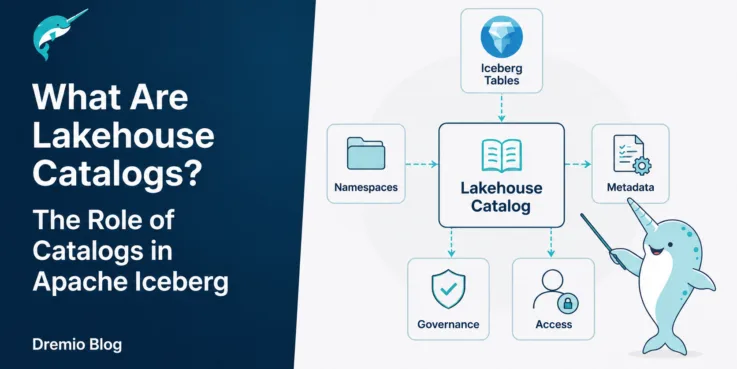
What Are Lakehouse Catalogs? The Role of Catalogs in Apache Iceberg
A lakehouse catalog is the component that answers one question: "Where is the current metadata for this table?" Without a catalog, every engine would need to independently locate and track metadata files. With a catalog, there is a single source of truth that coordinates reads, writes, and access control across all engines.





- 1
- 2
- 3
- …
- 46
- Next Page »