The Dremio Blog
Product Insights from the Dremio Blog
-

 Product Insights from the Dremio Blog
Beyond the Warehouse: How Dremio Dismantles the ETL Tax for High-Performance BI
Dremio is the engine that finally transforms the lakehouse into a high-performance BI reality. By unifying namespaces, automating acceleration via Reflections, and utilizing the power of Apache Iceberg, it moves the organization away from the "data moving" era.
-
 Product Insights from the Dremio Blog
7 Ways Dremio’s Vectorized Architecture Redefines Lakehouse Performance
The Dremio performance story is a narrative of engineering excellence meeting operational simplicity. By combining the efficiency of Apache Arrow, the "magic" of Iceberg-backed Reflections, and the intelligence of an AI-driven optimizer, Dremio has built a system where performance is an automated byproduct of the architecture.
-
 Product Insights from the Dremio Blog
Data Ingestion Patterns Using Dremio: From Raw Data to Apache Iceberg
By combining open standards, autonomous lakehouse operations, and agentic interaction, Dremio turns the journey from raw data to trusted insight into an incremental, flexible process, not a long, disruptive platform migration.
-
 Product Insights from the Dremio Blog
5 Steps to Supercharge Your Analytics with Dremio’s AI Agent and Apache Iceberg
The traditional barriers between complex, distributed data and clear, actionable answers have been removed. With an intelligent, AI-native data lakehouse, you no longer need to be a data engineer to explore your data; you just need to be curious.
-
Product Insights from the Dremio Blog
5 Ways Dremio Reflections Outsmart Traditional Materialized Views
Dremio Reflections don't just accelerate queries; they accelerate the entire analytics lifecycle by removing performance tuning from the critical path. By reclaiming the time and cognitive overhead traditionally spent on manual materialization management, Reflections empower data teams to shift their focus from infrastructure management to insight delivery.
-
Product Insights from the Dremio Blog
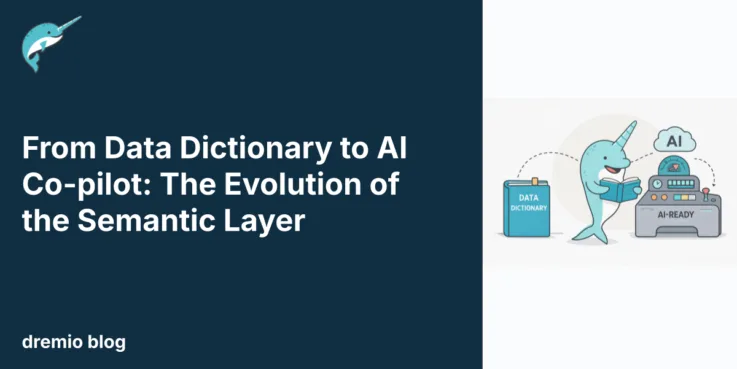
From Data Dictionary to AI Co-pilot: The Evolution of the Semantic Layer
The semantic layer has evolved far beyond its origins as a simple data dictionary. This evolution is marked by five critical shifts: a scalable layered architecture, a focus on serving AI as a primary consumer, a hybrid virtual-physical model for performance, universal federation into a single pane of glass, and governance that is built-in, not bolted-on. It now serves as the critical interface not just for human analysts using BI tools, but for a new generation of AI agents that rely on its rich semantic context to explore, analyze, and generate insights from data.
-
Product Insights from the Dremio Blog
Beyond Text-to-SQL: 4 Surprising Truths About the Modern Data Lakehouse
A truly modern data lakehouse is defined by more than just its use of open formats. Its value is measured by its intelligence and completeness. It is a platform where AI can take action, where openness extends to other compute engines, where the semantic layer is a structured and programmable asset, and where performance management is autonomous. These integrated capabilities are shifting the baseline for what organizations should expect from a data platform. The focus is no longer just on storing and querying data, but on creating a self-managing, intelligent, and truly unified ecosystem. As you evaluate your data strategy, ask yourself a forward-looking question: As AI becomes a more active participant in our data ecosystems, how will you leverage it to not just analyze your business, but to help run it?
-
Product Insights from the Dremio Blog
5 Surprising Ways Dremio’s AI Functions Unlock Your Unstructured Data
Dremio's AI Functions are more than just a new feature; they are a bridge over the long-standing divide between unstructured data and SQL-based analytics. By embedding LLM capabilities directly into the query engine, Dremio provides a complete workflow to unlock your most inaccessible data. You can now analyze data where it lives, choose the best AI model for the job, manage workloads with enterprise-grade controls, and transform raw files into governed, high-performance data products. The era of inaccessible information is over.
-
Product Insights from the Dremio Blog
5 Dremio Features That Will Change How You Think About The Apache Iceberg Lakehouse
The data lakehouse is evolving beyond just being a repository for data. With Dremio, it's becoming an autonomous, open, and intelligent platform that actively works to simplify your architecture, accelerate your queries, and expand the very definition of what data can be analyzed.
-
Product Insights from the Dremio Blog
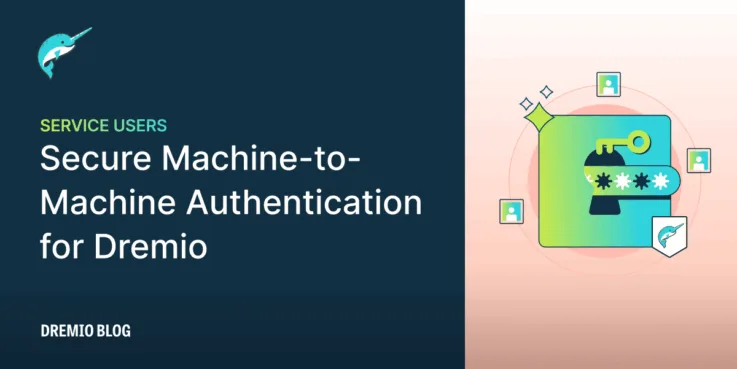
Introducing Service Users: Secure Machine-to-Machine Authentication for Dremio
We're excited to announce the introduction of Service Users in Dremio—a new authentication approach designed specifically for the agentic AI era, supporting machine-to-machine (M2M) applications and automated systems. Service users provide a more secure and streamlined way to integrate AI agents, applications, scripts, and CI/CD pipelines with your Dremio environment. What Are Service Users? Service […]
-
Product Insights from the Dremio Blog
Announcing Arrow Database Connectivity (ADBC) in Microsoft Power BI’s Connector for Dremio
We’re excited to share, in partnership with Microsoft, that Dremio is the first agentic lakehouse platform to fully support the open source Apache Arrow Database Connectivity (ADBC) driver for Power BI, bringing next-generation performance to your analytics. Whether you’re working with Dremio Cloud or Dremio Software, this enhancement is available across Power BI Desktop, Power […] -
Dremio Blog: Open Data Insights
Ingesting Data into Apache Iceberg Using Python Tools with Dremio Catalog
In this blog you will learn how to connect each tool to a REST catalog like Dremio Catalog, using bearer tokens and vended credentials to keep your pipelines secure and portable.
-
Product Insights from the Dremio Blog
Hands-on Introduction to Dremio Cloud Next Gen (Self-Guided Workshop)
Dremio Next Gen Cloud represents a major leap forward in making the data lakehouse experience seamless, powerful, and accessible. Whether you're just beginning your lakehouse journey or modernizing a complex data environment, Dremio gives you the tools to work faster and smarter—with native Apache Iceberg support, AI-powered features, and a fully integrated catalog. From federated queries across diverse sources to autonomous performance tuning, Dremio abstracts away the operational headaches so you can focus on delivering insights. And with built-in AI capabilities, you're not just managing data—you’re unlocking its full potential.
-
Product Insights from the Dremio Blog
Introducing Dremio Cloud, The Agentic Lakehouse
We’re excited to announce Dremio Cloud, The Agentic Lakehouse—the lakehouse built for agents and managed by agents. This milestone marks a major leap forward in Dremio’s evolution, reimagining the modern lakehouse for the agentic era, where intelligent systems collaborate with humans to deliver insights, automate operations, and continuously optimize performance. As organizations accelerate their AI […]
-
Product Insights from the Dremio Blog
Introducing the VS Code Extension for Dremio
Many data engineers and data analysts spend much of their day in Visual Studio (VS) Code, writing SQL, testing queries, and working with data. Constantly switching between tools disrupts productivity and the user work flow. The VS Code extension for Dremio brings the power of the agentic lakehouse directly into your development environment, enabling you […]
















- « Previous Page
- 1
- 2
- 3
- 4
- 5
- 6
- …
- 18
- Next Page »