The Dremio Blog
Dremio Blog: Open Data Insights
-

 Dremio Blog: Open Data Insights
The Apache Polaris REST API: How Engines Talk to the Catalog
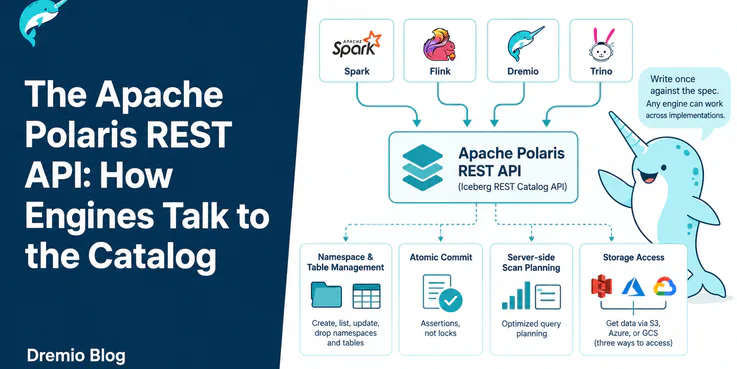
Apache Polaris implements the Iceberg REST Catalog specification, a set of HTTP endpoints that any Iceberg client can speak. The specification covers namespace and table management, an atomic commit protocol built on assertions rather than locks, server-side scan planning, and three different ways for a client to obtain storage access. Because the contract is the specification rather than a vendor SDK, an engine written against one implementation works against all of them.
-
Dremio Blog: Open Data Insights
Choosing an Apache Iceberg Catalog: Polaris, Gravitino, Unity, Lakekeeper and More
Choosing an Apache Iceberg catalog comes down to three questions, and the feature matrices most vendors publish do not help with any of them. Do you need more than one engine to write to the same tables? Do you need governance you do not control to be predictable? And do you need to keep the catalogs you already run while you migrate? Answer those and the field narrows from seven options to about two.
-
Dremio Blog: Open Data Insights
Access Control in Apache Polaris: RBAC and Credential Vending
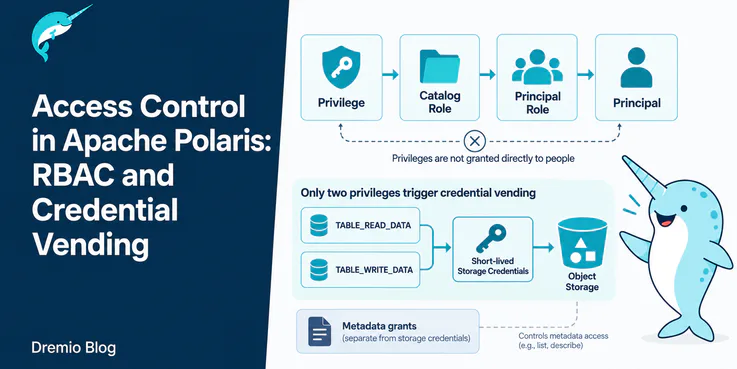
Apache Polaris controls access through role-based access control with four levels: a privilege is granted to a catalog role, the catalog role is granted to a principal role, and the principal role is assigned to a principal. Privileges never attach to a person directly. The two privileges that matter most, TABLE_READ_DATA and TABLE_WRITE_DATA, are the only ones that cause Polaris to issue short-lived storage credentials, and they sit outside the metadata grant that covers everything else.
-
Dremio Blog: Open Data Insights
Apache Polaris Architecture Explained
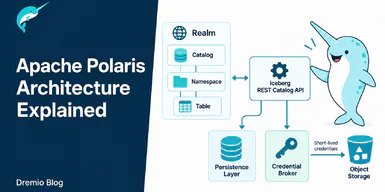
Apache Polaris is a catalog service for Apache Iceberg. It answers the question “which files make up this table right now, and are you allowed to touch them?” Its architecture has four moving parts: an entity model that nests catalogs, namespaces and tables inside a realm, a persistence layer that stores those entities and their grants, a REST service that speaks the Iceberg REST Catalog API, and a credential broker that hands engines short-lived, path-scoped access to object storage.
-
Dremio Blog: Open Data Insights
State of the Open Lakehouse, September 2026
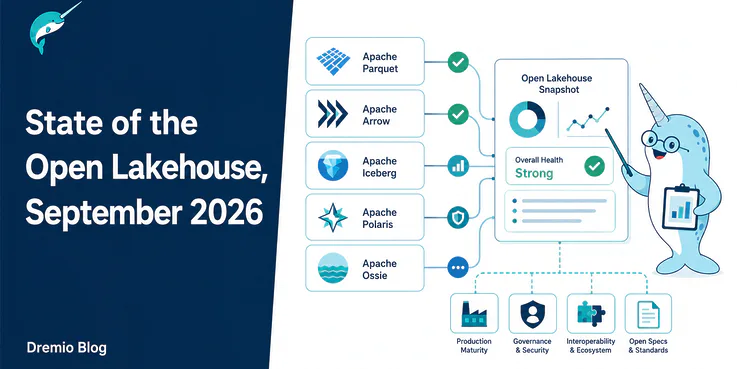
The state of the open lakehouse in September 2026 is a stack that stopped arguing about whether it won and started dealing with the consequences of winning.
-
Dremio Blog: Open Data Insights
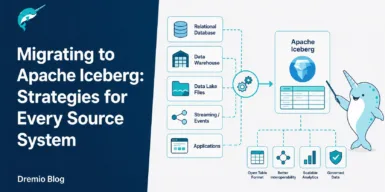
Migrating to Apache Iceberg: Strategies for Every Source System
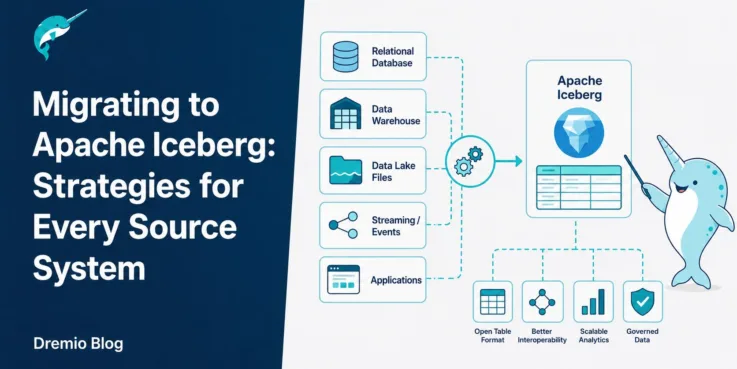
This is Part 15, the final article of a 15-part Apache Iceberg Masterclass. Part 14 covered hands-on Dremio Cloud. This article covers the three migration strategies and how to execute a zero-downtime migration using the view swap pattern. Most organizations do not start with Iceberg. They have years of data in Hive tables, data warehouses, CSV files, databases, […]
-
Dremio Blog: Open Data Insights
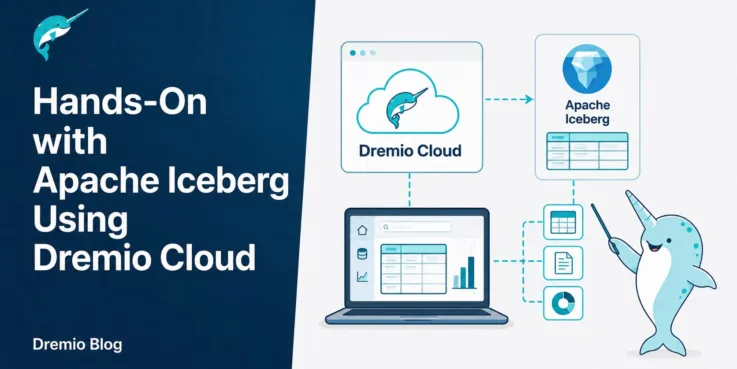
Hands-On with Apache Iceberg Using Dremio Cloud
This article is a practical walkthrough of working with Iceberg on Dremio Cloud, covering table creation, data ingestion, optimization, semantic layer construction, and AI-powered analytics.
-
Dremio Blog: Open Data Insights
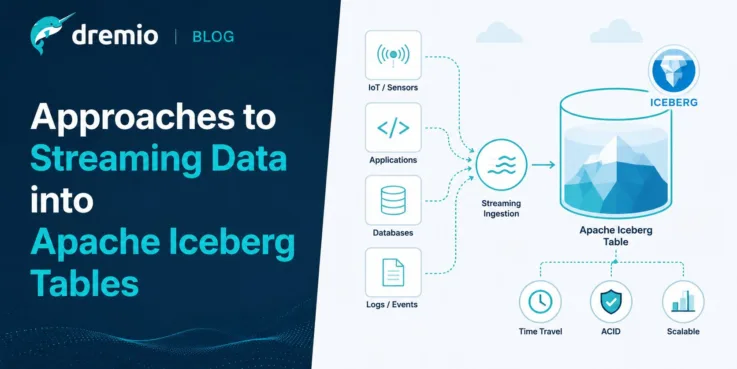
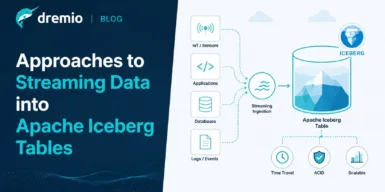
Approaches to Streaming Data into Apache Iceberg Tables
Streaming ingestion bridges this gap by committing data to Iceberg tables at regular intervals. The challenge is that frequent commits create the small file problem, and managing that trade-off between data freshness and table health is the central concern of streaming to Iceberg.
-
Dremio Blog: Open Data Insights
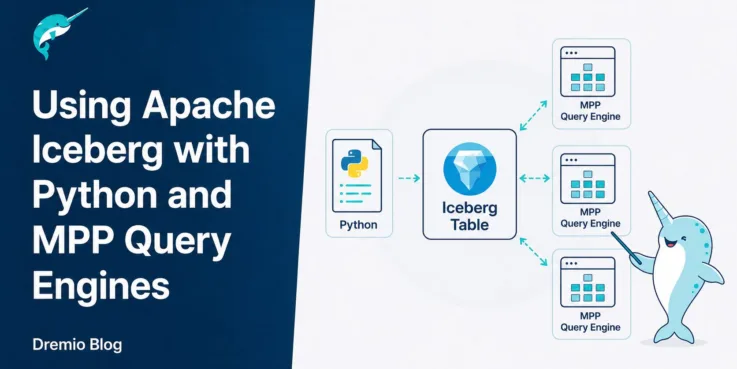
Using Apache Iceberg with Python and MPP Query Engines
This article covers the two main ways to access Iceberg data: directly from Python libraries and through MPP (massively parallel processing) query engines.
-
Dremio Blog: Open Data Insights
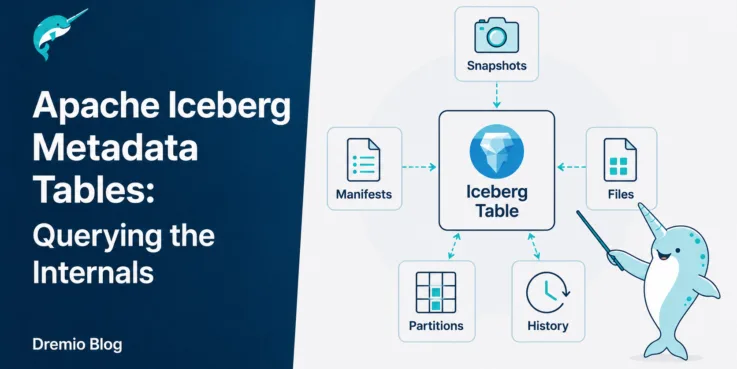
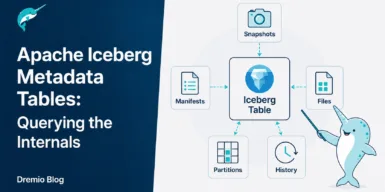
Apache Iceberg Metadata Tables: Querying the Internals
This article covers the metadata tables that let you inspect Iceberg table internals using standard SQL. Iceberg exposes its internal metadata as queryable virtual tables.
-
Dremio Blog: Open Data Insights
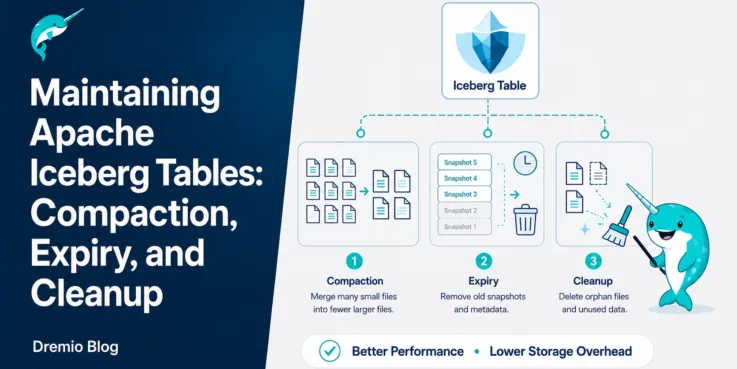
Maintaining Apache Iceberg Tables: Compaction, Expiry, and Cleanup
This article covers the four maintenance operations that keep Iceberg tables healthy and the three approaches to running them.
-
Dremio Blog: Open Data Insights
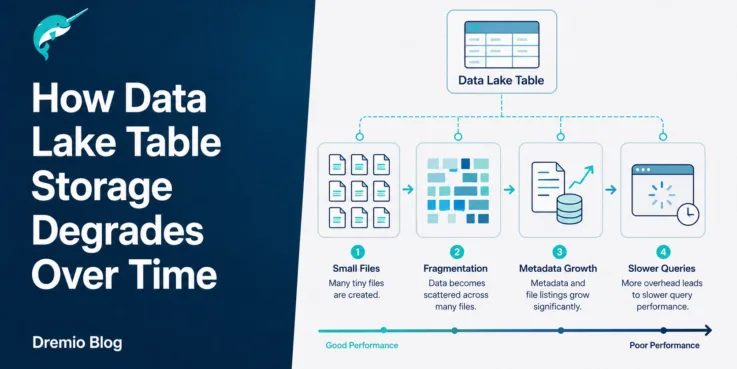
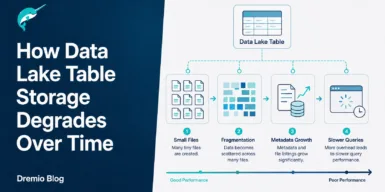
How Data Lake Table Storage Degrades Over Time
An Iceberg table that works well on day one will not work well on day 365 without maintenance. Every append, update, and delete operation adds files and metadata.
-
Dremio Blog: Open Data Insights
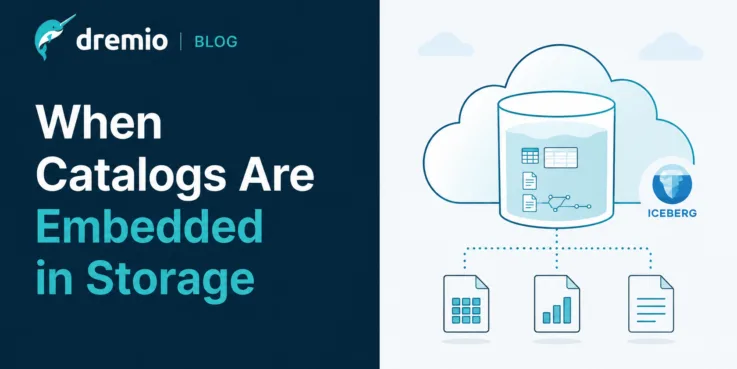
When Catalogs Are Embedded in Storage
This article examines a newer approach: embedding the catalog directly inside the storage layer. Traditional Iceberg architectures have three components: the query engine, a standalone catalog, and object storage.
-
Dremio Blog: Open Data Insights
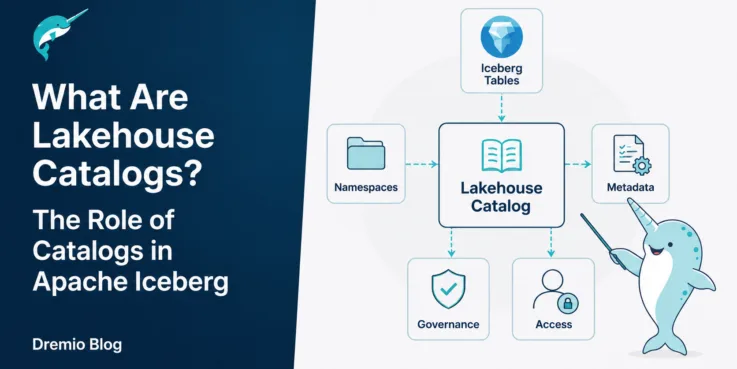
What Are Lakehouse Catalogs? The Role of Catalogs in Apache Iceberg
A lakehouse catalog is the component that answers one question: "Where is the current metadata for this table?" Without a catalog, every engine would need to independently locate and track metadata files. With a catalog, there is a single source of truth that coordinates reads, writes, and access control across all engines.
-
Dremio Blog: Open Data Insights
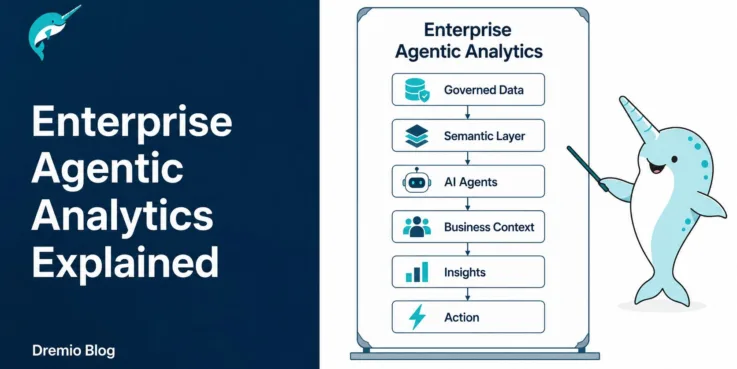
Enterprise Agentic Analytics Explained
Learn how agentic workflows for enterprise analytics connect AI agents, governed data and multi-step analysis to improve complex business decisions.




- « Previous Page
- 1
- …
- 3
- 4
- 5
- 6
- 7
- …
- 19
- Next Page »