The Dremio Blog
Dremio Blog: Various Insights
-

 Dremio Blog: Various Insights
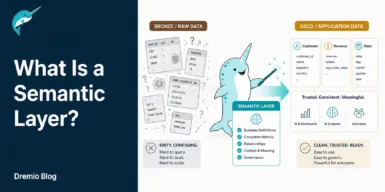
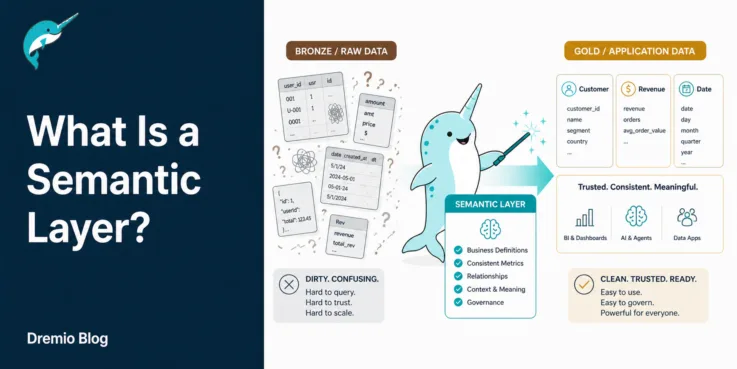
What Is a Semantic Layer?
This guide explores what semantic layers are, their benefits and how they’re implemented within your enterprise data stack.
-
 Dremio Blog: Various Insights
Why Retail Analytics Backlogs Are Costing Your Business Real Margin
Retail analytics decisions: markdown timing, campaign activation, inventory replenishment. They are supposed to be data-driven. But at most retailers, the data isn't ready when the decision needs to be made. Your merchandising team sends a request to data engineering on Monday. The report comes back Thursday. By then, the sell-through window has shifted, the promotion […]
-
 Dremio Blog: Various Insights
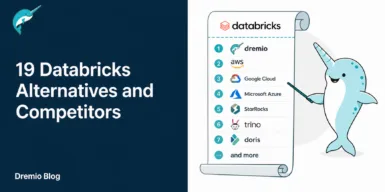
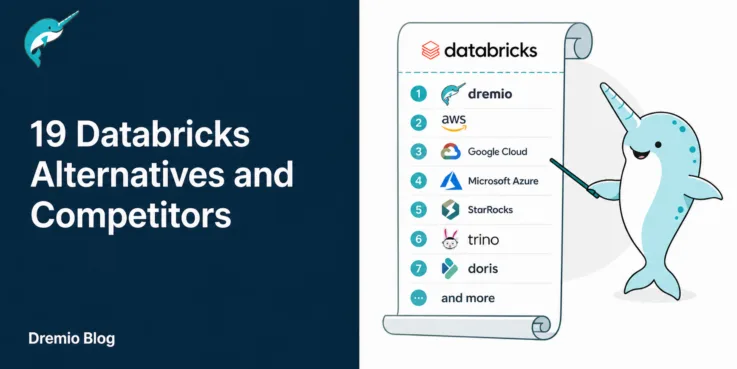
19 Databricks Alternatives and Competitors
Compare 19 Databricks alternatives for data analytics, AI and lakehouse workloads, built to accelerate SQL and simplify operations.
-
 Dremio Blog: Various Insights
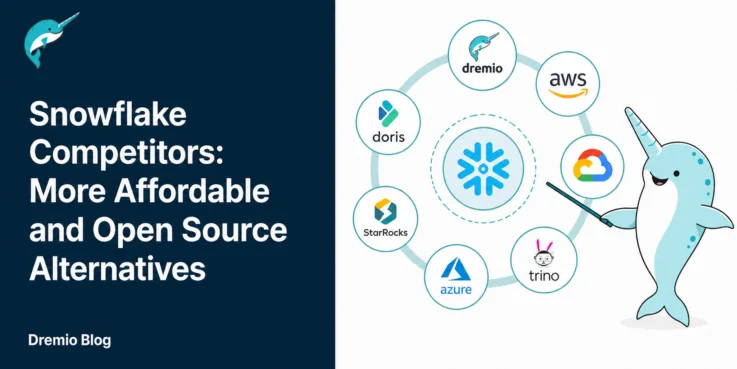
Snowflake Competitors: More Affordable and Open Source Alternatives
The main differences come down to architecture, cost and AI readiness. Snowflake requires copying data into its warehouse and charges per compute credit consumed. Dremio queries data in place with Zero-ETL federation and includes an AI semantic layer, a built-in AI agent, and autonomous optimization. For a full breakdown, see the Dremio vs Snowflake comparison.
-
Dremio Blog: Various Insights
SAP Intends to Acquire Dremio
Accelerating the Agentic Lakehouse Today, we’re thrilled to announce that Dremio has agreed to join forces with SAP, pending regulatory approval. Together, we will be able to deliver one open platform where agents reason over all enterprise data, decide, and act. This acquisition will give us the scale and backing to accelerate our agentic vision, […]
-
Dremio Blog: Partnerships Unveiled
Query Dremio-governed Iceberg tables directly from Microsoft Fabric (Preview)
Microsoft Fabric now includes the Mirrored Dremio catalog, a new item type that brings Dremio-managed Iceberg tables into OneLake without copying data or building pipelines. If your organization runs Dremio as its lakehouse platform, your Fabric users can now query that data from Power BI, the SQL analytics endpoint, and other Fabric experiences, while the […]
-
Dremio Blog: Various Insights
Iceberg Deletion Vectors: The Better Way to Delete Rows
For all the many improvements data lakehouses bring to analytics, there's one uncomfortable trade-off: deleting rows is expensive. In a system built around immutable Parquet files, a delete is actually a rewrite. You read the file, filter out the rows you don't want, and write a new file. At scale those I/O costs mount up […]
-
Dremio Blog: Various Insights
How an Agentic Lakehouse Powers Real‑Time Customer Growth and Retention in the Financial Services Industry
Winning in financial services and insurance now depends on how well you understand each customer or policyholder and turn that understanding into timely, relevant, and trusted actions. Customer 360 and hyper‑personalization, powered by an agentic data and AI foundation, are now essential for banks, insurers, wealth and asset managers, and financial technology firms that want […]
-
Dremio Blog: Various Insights
Iceberg Row Lineage: Giving Every Row a Paper Trail
Most data teams think about lineage at the table or column level. Which pipeline wrote to this table? Which upstream source feeds this column? Those are useful questions, but they stop short of what actually matters in an audit or incident investigation: which specific rows were affected, by which operation, and when. Apache Iceberg v3 […]
-
Dremio Blog: Various Insights
Your Three Paths to Using AI With Dremio
Dremio offers three distinct integration points to the data in your lakehouse. This gives users the freedom to pick the interface, models, and tools that are right for them. Whether you're a business user, a seasoned data analyst, or a developer, we have an integration that will suit how you like to work. The built-in […]
-
Dremio Blog: Various Insights
From Burden to Breakthrough: How Agentic AI Reinvents Risk and Regulatory Reporting
Agentic AI is how leading financial institutions turn risk aggregation and regulatory reporting from a slow, manual burden into a real‑time, always on advantage, boosting accuracy, slashing costs, and accelerating insight. Dremio’s Agentic Lakehouse gives financial institutions the data foundation and AI agents they need to industrialize risk aggregation and regulatory reporting, with higher accuracy, […]
-
Dremio Blog: Various Insights
The VARIANT Type: How to Store JSON Without the Pain
Working with JSON in an Iceberg lakehouse has always been a compromise: you either store JSON as VARCHAR strings and accept the performance hit every time a query needs to extract a field, or you flatten the JSON into a wide table of nullable columns and watch your schema bloat. Both work fine but have […]
-
Dremio Blog: Various Insights
Winning the Real-Time War on Financial Crime with Dremio’s Agentic Lakehouse
Financial crime has become a trillion‑dollar problem, and the only sustainable way to fight it is with AI‑driven, real‑time analytics on complete, well‑governed data. Dremio’s Agentic Lakehouse platform is designed to give Financial Services organizations exactly what effective fraud and AML programs need: unified data, governed access, and sub‑second analytics across historical and streaming data. […]
-
Dremio Blog: Various Insights
Iceberg Won The Table Format Wars. What Does That Mean for You?
The third annual Iceberg Summit is happening this week and it’s rapidly growing into one of the must attend data events for the year. Why? Well, Iceberg won the table format wars a couple years ago because companies wanted to avoid lock-in and they wanted interoperability. The Iceberg lakehouse also quietly became the default data […]
-
Dremio Blog: Various Insights
Dremio Advances the Modern Iceberg Lakehouse with Iceberg V3 Support
For years, the promise of the open lakehouse was simple: store your data once, query it with any tool, and never get locked into a single vendor's ecosystem. Apache Iceberg made that promise real. It became the industry-standard table format because it worked, it was open, and it kept getting better. Iceberg version 3 (V3) […]













- « Previous Page
- 1
- 2
- 3
- 4
- 5
- …
- 10
- Next Page »