Healthcare data faces strict regulations like HIPAA and GDPR, making compliance essential for organizations.
Dremio's Intelligent Lakehouse Platform provides secure, compliant data management while allowing quick access to insights.
Key challenges include fragmented data silos, compliance risks, and the need for interoperability across systems.
Best practices for healthcare data platforms include adopting a lakehouse architecture, enforcing access controls, and staying ahead of regulatory changes.
Dremio combines governance and performance, helping healthcare organizations meet demands and improve patient care.
Healthcare data is among the most sensitive information any organization manages. Electronic health records, lab results, insurance details, and billing data all contain protected health information (PHI) that, if exposed, could cause immense harm to patients and carry heavy regulatory penalties for providers. This is why laws like HIPAA, HITECH, and the 21st Century Cures Act mandate strict safeguards, from encryption and audit logging to fine-grained access controls. Meanwhile, global frameworks such as GDPR and state-level privacy laws like CCPA add layers of complexity for organizations that operate across regions.
At the same time, the demand for advanced analytics, AI-driven research, and real-time patient insights is growing. Healthcare companies need to harness their data for better outcomes, while ensuring it remains secure, compliant, and governed. This tension between innovation and regulation makes platform choice critical.
Dremio, with its HIPAA-compliant Intelligent Lakehouse Platform, offers healthcare organizations a way to unify disparate data sources, apply enterprise-grade security controls, and empower clinicians, researchers, and analysts with self-service insights, all without sacrificing compliance. By combining open standards with robust governance and performance features, Dremio enables healthcare companies to meet regulatory demands while accelerating discovery and improving patient care.
Try Dremio’s Interactive Demo
Explore this interactive demo and see how Dremio's Intelligent Lakehouse enables Agentic AI
The Regulatory Landscape in Healthcare Data
Healthcare organizations operate in one of the most tightly regulated environments in the world, where compliance is not optional but foundational. A single lapse can result in fines, reputational damage, and, most importantly, a loss of patient trust. Understanding the key regulations shaping healthcare data management is the first step toward building a secure, compliant data platform.
HIPAA and HITECH
In the United States, the Health Insurance Portability and Accountability Act (HIPAA) establishes the baseline for protecting electronic protected health information (ePHI). It requires administrative, physical, and technical safeguards to ensure the confidentiality, integrity, and availability of patient data. The HITECH Act further extends these safeguards, placing direct liability on business associates and strengthening requirements for breach notifications.
The 21st Century Cures Act
This landmark legislation aims to make patient data more portable and accessible. It prohibits “information blocking,” ensuring patients and providers can securely share electronic health information across systems. However, it also introduces new compliance challenges, as organizations must balance data interoperability with strict privacy protections.
Global and Regional Regulations
For multinational healthcare organizations, regulations like the EU’s General Data Protection Regulation (GDPR) and state laws such as California’s Consumer Privacy Act (CCPA) add complexity. These frameworks impose requirements around data minimization, consent management, and the right to access or delete personal information, areas that healthcare companies must address when building modern data platforms.
Emerging Updates
Cybersecurity threats are pushing regulators to act. Proposed updates to the HIPAA Security Rule in 2025 include stronger requirements around encryption, incident response planning, and continuous risk assessments. Healthcare organizations must prepare for these evolving expectations while modernizing their data infrastructure.
Data Governance Challenges in Healthcare
Even with clear regulations in place, healthcare organizations face practical challenges when it comes to governing and managing their data. These challenges often stem from the complexity of healthcare ecosystems and the high stakes of handling protected health information (PHI).
Fragmented and Siloed Data
Patient information is often spread across multiple systems, electronic health records (EHRs), billing software, lab management systems, and third-party applications. Without proper governance, these silos lead to inconsistencies, duplicate records, and a lack of unified patient views. This fragmentation slows down analytics and creates blind spots in care delivery.
Compliance Risks
Healthcare data carries significant liability. Non-compliance with HIPAA, GDPR, or state laws can result in fines, reputational damage, and even operational shutdowns. For example, ransomware attacks and breaches in recent years have forced organizations into costly settlements. Governance practices such as access control, audit logging, and encryption are not just best practices, they are necessities.
Interoperability Pressures
Regulations like the 21st Century Cures Act require healthcare providers to ensure that patients can access and share their medical data across systems. Achieving this level of interoperability requires robust governance structures, metadata management, and clear lineage tracking so that organizations can prove data integrity and compliance at every stage.
Legacy Systems and Migration
Many providers still rely on legacy systems that were not designed with modern compliance or interoperability in mind. Migrating to cloud or hybrid platforms introduces new security considerations and requires governance frameworks that ensure continuity of compliance during and after migration.
Rising Cybersecurity Demands
With proposed updates to the HIPAA Security Rule adding stronger cybersecurity provisions, healthcare organizations must evolve quickly. Encryption, role-based access control, continuous monitoring, and risk assessments are now baseline requirements rather than optional safeguards.
Why Dremio is an Ideal Platform for Healthcare Data
Healthcare organizations don’t just need a data platform that can analyze information quickly, they need one that can do so securely, at scale, and in compliance with strict regulatory frameworks. This is where Dremio stands out. Its Intelligent Lakehouse Platform is designed with the governance, security, and performance features healthcare providers need to meet today’s challenges.
Proven Compliance and Certifications
Dremio is HIPAA-compliant and holds certifications like SOC 2 Type II, ISO 27001, and GDPR compliance. These independent audits validate that Dremio’s platform meets the stringent security and privacy requirements necessary to manage sensitive patient data.
Robust Security Features
Encryption at Rest and in Transit: All data remains encrypted throughout its lifecycle, with options for customer-managed keys.
Fine-Grained Access Control: Role-based access control (RBAC) and row/column-level policies ensure that clinicians, researchers, and administrators only see the data they are authorized to view.
Audit Logging: Every query, login, and data modification is recorded, making compliance reporting and forensic analysis straightforward.
Identity Integration: Seamless support for identity providers like Azure AD and Okta ensures that enterprise authentication and SSO extend into the data platform.
Unified Governance and Open Architecture
Dremio provides a centralized semantic layer where governance policies can be applied once and reused across analytics tools. With support for open standards like Apache Iceberg and Apache Arrow, healthcare organizations can integrate diverse data sources, from EHRs and lab systems to financial data, without complex ETL pipelines. This not only improves interoperability but also ensures compliance by maintaining consistent security and lineage.
High Performance for Real-Time Insights
Healthcare requires timely data access, whether for patient dashboards, clinical research, or regulatory reporting. Dremio’s query acceleration technologies, like Autonomous Reflections and Iceberg table optimizations, reduce reporting cycles from weeks to hours. This enables providers to make data-driven decisions faster without compromising on security.
Real-World Impact
Healthcare organizations using Dremio have reported dramatic improvements: reducing month-end reporting times from two weeks to just 1.5 hours, empowering thousands of staff with self-service analytics, and replacing manual data pipelines with automated, governed processes. These gains directly translate into better operational efficiency and improved patient outcomes.
Key Takeaways and Best Practices for Healthcare Data Platforms
Building a modern healthcare data platform requires more than just compliance checkboxes, it requires a holistic approach that balances regulatory obligations, operational efficiency, and innovation. Based on both industry best practices and the capabilities Dremio delivers, here are the essential principles to follow:
1. Adopt a Lakehouse Architecture
A lakehouse unifies structured and unstructured data across EHR systems, labs, billing platforms, and external sources. By consolidating into an open format like Apache Iceberg, organizations eliminate data silos, simplify governance, and create a foundation for real-time analytics.
2. Enforce Fine-Grained Access Controls
Role-based access control (RBAC), combined with row-level and column-level security policies, ensures that only the right individuals can view sensitive patient data. This reduces the risk of accidental exposure and aligns directly with HIPAA, GDPR, and CCPA mandates.
3. Encrypt and Audit Everything
Encryption at rest and in transit, paired with comprehensive audit logging, provides strong defenses against breaches while simplifying regulatory reporting. Audit logs also create an immutable trail of activity that makes compliance audits more efficient and transparent.
4. Empower Self-Service Analytics
Clinicians, researchers, and operational teams shouldn’t need to wait weeks for IT to prepare reports. Providing self-service access through governed semantic layers enables faster insights while maintaining compliance, allowing staff to focus on patient care and innovation rather than manual data tasks.
5. Stay Ahead of Regulatory Changes
Healthcare regulations continue to evolve, from the 21st Century Cures Act’s push for interoperability to upcoming HIPAA Security Rule updates that strengthen cybersecurity expectations. Platforms must be flexible enough to adapt governance policies, encryption standards, and reporting mechanisms as new requirements emerge.
Conclusion – Why Dremio is the Right Choice for Healthcare Data
Healthcare organizations face a unique challenge: they must manage some of the world’s most sensitive data while also unlocking its potential to improve patient outcomes, accelerate research, and streamline operations. Regulations like HIPAA, HITECH, GDPR, and the 21st Century Cures Act ensure accountability, but they also raise the bar for data security, governance, and interoperability.
Dremio’s Intelligent Lakehouse Platform is built to meet these demands head-on. With HIPAA compliance, fine-grained access controls, end-to-end encryption, and comprehensive audit logging, Dremio provides the technical and organizational safeguards healthcare companies need to remain compliant. At the same time, its open architecture, high-performance query acceleration, and self-service semantic layer empower clinicians, researchers, and analysts to derive insights faster, without compromising governance.
For healthcare providers, insurers, and research institutions, Dremio offers a secure, future-ready foundation that balances compliance with innovation. By adopting a platform that unifies data, strengthens security, and accelerates discovery, healthcare organizations can confidently navigate an evolving regulatory landscape while delivering the data-driven care patients deserve.
Ingesting Data Into Apache Iceberg Tables with Dremio: A Unified Path to Iceberg
By unifying data from diverse sources, simplifying data operations, and providing powerful tools for data management, Dremio stands out as a comprehensive solution for modern data needs. Whether you are a data engineer, business analyst, or data scientist, harnessing the combined power of Dremio and Apache Iceberg will undoubtedly be a valuable asset in your data management toolkit.
Oct 12, 2023·Product Insights from the Dremio Blog
Table-Driven Access Policies Using Subqueries
This blog helps you learn about table-driven access policies in Dremio Cloud and Dremio Software v24.1+.
Aug 31, 2023·Dremio Blog: News Highlights
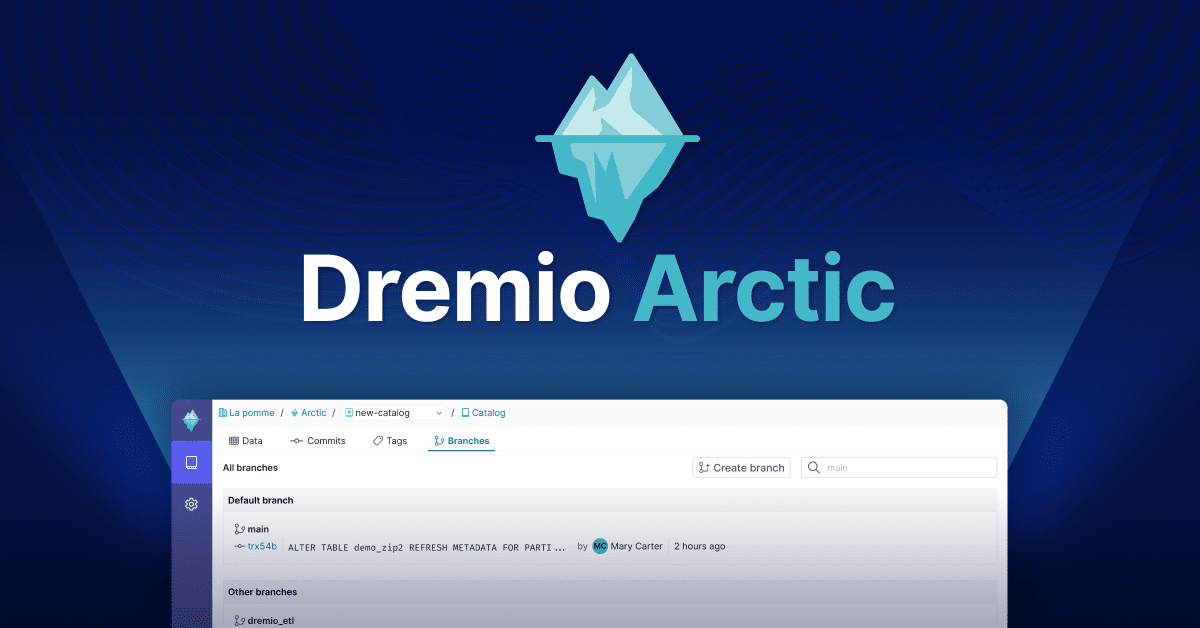
Dremio Arctic is Now Your Data Lakehouse Catalog in Dremio Cloud
Dremio Arctic bring new features to Dremio Cloud, including Apache Iceberg table optimization and Data as Code.