Most AI assistants fail at data analysis because they lack business context. You can build the most complex retrieval pipelines imaginable, but without a semantic layer and direct access to your data, large language models guess metrics and hallucinate schemas.
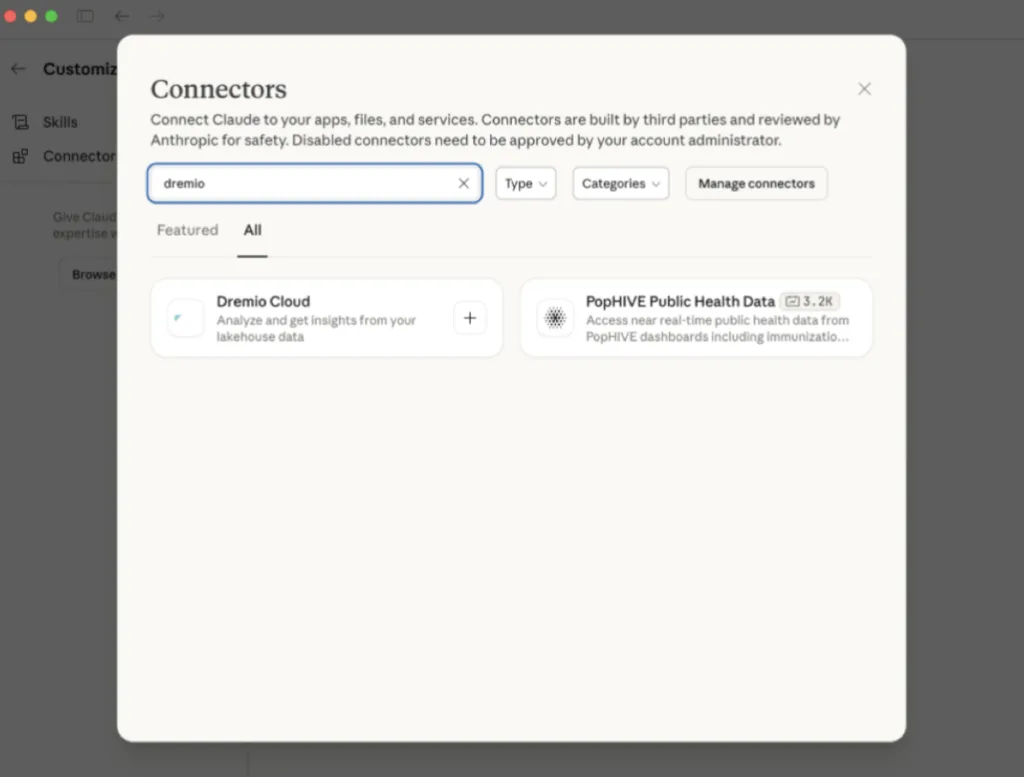
Today, we fix that. You can now connect Claude to Dremio as your dedicated data analyst using our Model Context Protocol (MCP) server. The new connector integrates Claude Desktop directly into your Dremio environment with a single click.
One-Click Setup for AI Analytics
With a simple one-click setup, you can connect Claude to your Dremio Lakehouse.
You skip moving data. Claude queries your data exactly where it lives right now. Dremio enforces your fine-grained access controls, row-level security, and column-level masking automatically. The AI only sees the data the user querying it is allowed to see.
This direct connection means your AI agent works with live data. When a new sales record lands in your object storage, Claude can analyze it a second later.
Why Claude Needs an Agentic Lakehouse
An AI model is only as smart as the context and data you feed it. Dremio is the first data platform built for AI agents and managed by AI agents. It provides the necessary foundation that makes agentic analytics accurate.
Without the right architecture, asking an AI to analyze your company's data leads to wrong answers written in generic SQL. Dremio solves this through its core pillars of the agentic lakehouse.
Try Dremio’s Interactive Demo
Explore this interactive demo and see how Dremio's Intelligent Lakehouse enables Agentic AI
The AI Semantic Layer Provides Business Context
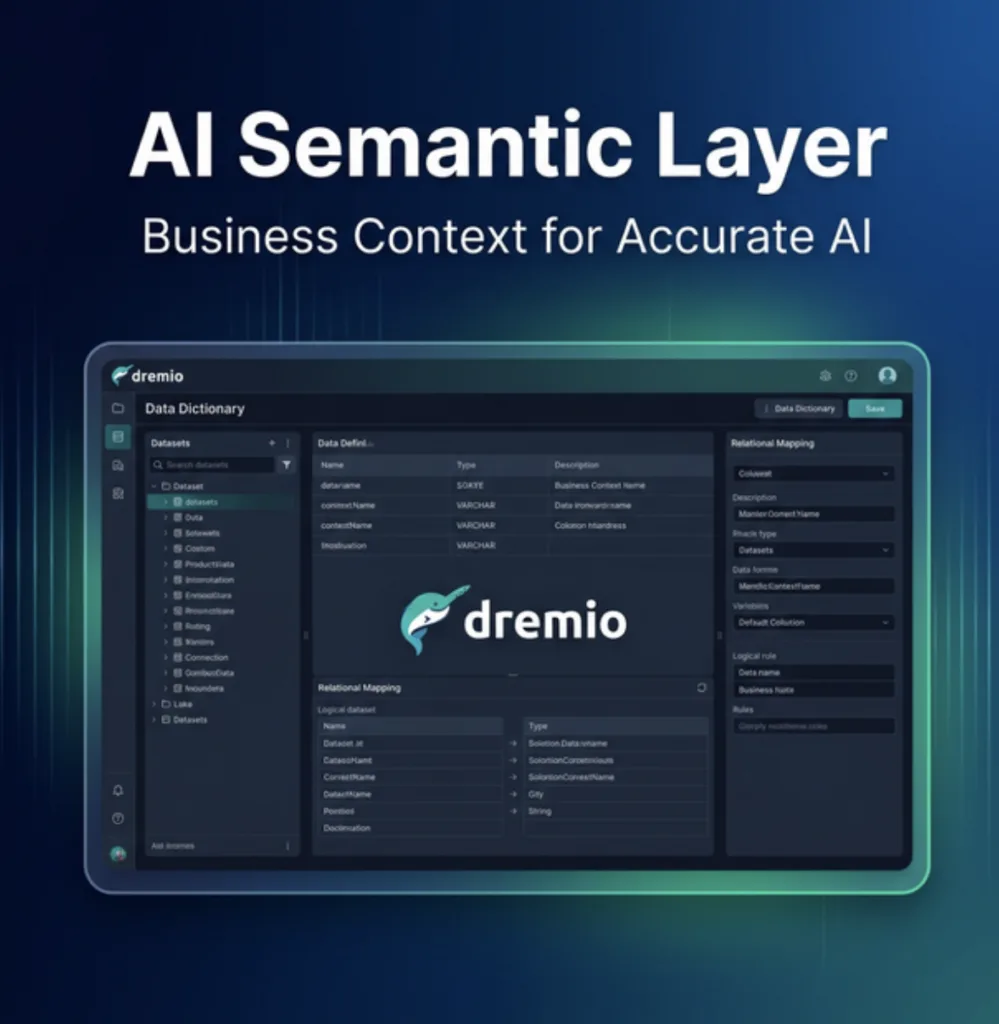
Without context, AI models hallucinate. Dremio’s AI Semantic Layer teaches the AI your business language so it generates the right SQL, not generic SQL.
The semantic layer defines precisely what terms like "churn rate" or "active customer" mean for your business. Instead of hoping Claude figures out which columns represent standard metrics, Claude reads your verified definitions. The system includes wikis and labels attached directly to your datasets. When Claude receives a prompt about quarterly revenue, it reads the semantic layer first, understands your specific business logic, and writes a query that matches your actual requirements.
Query Federation Eliminates Data Movement
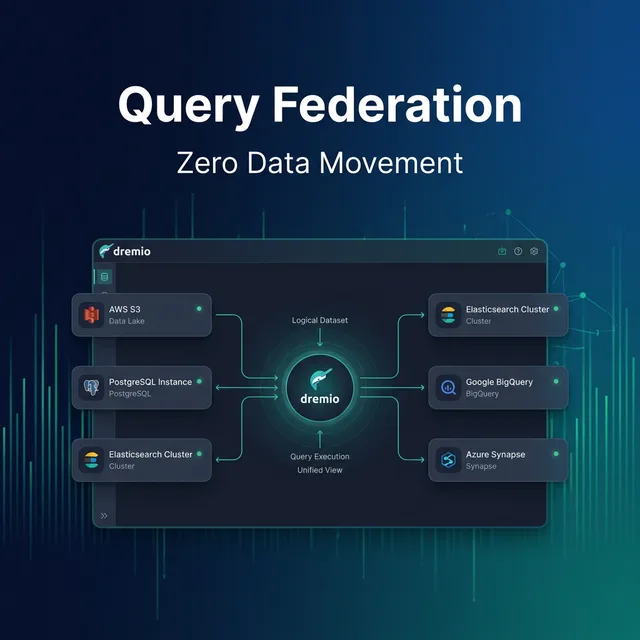
Claude needs universal data access to answer complex questions that span different departments. Dremio queries data in place across multiple systems. Dremio offers the greatest number of enterprise supported data connectors of any lakehouse paltform.
Connect to your S3 buckets, PostgreSQL databases, and Snowflake warehouses simultaneously. When you ask Claude a question, it generates the SQL, and Dremio executes the federated query. Dremio uses predicate pushdowns to push filtering work to the source systems. You query data in place without the risk and cost of data movement. While Dremio allows you to work with where you data where it is now, Dremio is the open, easy and fast path to a native-iceberg lakehouse which brings you cutting edge performance on open data.
Autonomous Performance Delivers Instant Answers
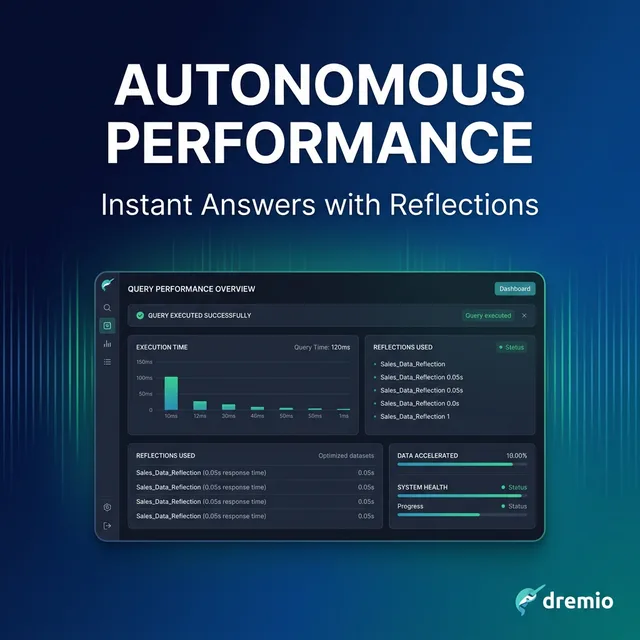
When Claude generates complex analytical queries, they need to run fast. An AI agent is useless if you wait twenty minutes for a response. Dremio accelerates these workloads using Data Reflections and the Columnar Cloud Cache (C3).
Reflections are physically optimized, pre-computed copies of data that the query optimizer uses transparently. You don't rewrite queries to hit them; Dremio substitutes the fastest Reflection automatically. Dremio even learns from query patterns and manages these Reflections without human intervention. Performance is an automated byproduct of the architecture, not a manual tuning exercise.
Because Dremio co-created Apache Arrow, the platform processes data natively in a columnar in-memory format. Dremio eliminates the serialization tax that slows down traditional query engines.
Talk to Your Data Where It Lives
Once connected, Claude acts as a true data co-pilot. You interact with your data naturally, asking questions and iterating on the results immediately.
Ask Claude to find the highest-performing marketing channels this quarter. It will read your semantic layer, generate the correct SQL, fetch the results through Dremio, and build a chart directly in your chat window.
-- Claude automatically generates queries like this based on your semantic layer

SELECT

    marketing_channel,

    SUM(revenue) AS total_revenue,

    COUNT(DISTINCT customer_id) AS acquired_customers

FROM business_layer.marketing_performance

WHERE event_date >= CURRENT_DATE - INTERVAL '90' DAY

GROUP BY marketing_channel

ORDER BY total_revenue DESC;
Because Dremio handles the query federation and the performance tuning, Claude focuses on what it does best. It reasons about your data, visualizes trends, and explains the results in plain English.
AI SQL Functions Bring LLMs Inside Your Queries
The integration goes both ways. In addition to Claude querying Dremio, Dremio embeds LLM capabilities directly into the SQL engine through AI functions.
Run sentiment analysis on customer reviews directly in a SELECT statement, without exporting data or writing Python. Functions like AI_CLASSIFY and AI_GENERATE extract structured data from unstructured text in your data lake. You analyze structured tables and unstructured documents using the exact same interface.
Only Iceberg Native Lakehouse
Adding an AI agent to your data stack should not force you into a proprietary ecosystem. The Dremio open catalog architecture is built on Apache Polaris, the Apache standard for lakehouse catalogs.
Your data stays in your storage, in an open format, accessible by any engine read and write. No lock-in. You store everything as Apache Iceberg tables in your own S3 or Azure storage. These tables are automatically optimized and managed with Dremio’s Iceberg Clustering as well as table maintenance. When you connect Claude through the MCP server, it queries exactly the same open formats that your Spark or Flink jobs use.
Try Dremio With Claude Today
Connect Claude to Dremio right now and Try Dremio Cloud for Free and go from zero to AI analytics on day one.
Try Dremio Cloud free for 30 days
Deploy agentic analytics directly on Apache Iceberg data with no pipelines and no added overhead.
Ingesting Data Into Apache Iceberg Tables with Dremio: A Unified Path to Iceberg
By unifying data from diverse sources, simplifying data operations, and providing powerful tools for data management, Dremio stands out as a comprehensive solution for modern data needs. Whether you are a data engineer, business analyst, or data scientist, harnessing the combined power of Dremio and Apache Iceberg will undoubtedly be a valuable asset in your data management toolkit.
Oct 12, 2023·Product Insights from the Dremio Blog
Table-Driven Access Policies Using Subqueries
This blog helps you learn about table-driven access policies in Dremio Cloud and Dremio Software v24.1+.
Aug 31, 2023·Dremio Blog: News Highlights
Dremio Arctic is Now Your Data Lakehouse Catalog in Dremio Cloud
Dremio Arctic bring new features to Dremio Cloud, including Apache Iceberg table optimization and Data as Code.