Self-service analytics platform for data-driven innovation
Ensure self-service analytics across all your data, no matter where it lives
Analytic insight at everyone's fingertips with self-service data access
Deliver seamless self-service data access to accelerate speed to insight across the business. With intuitive capabilities for SQL developers, data analysts, and data scientists, Dremio Self-Service Analytics speed you from data to insight.
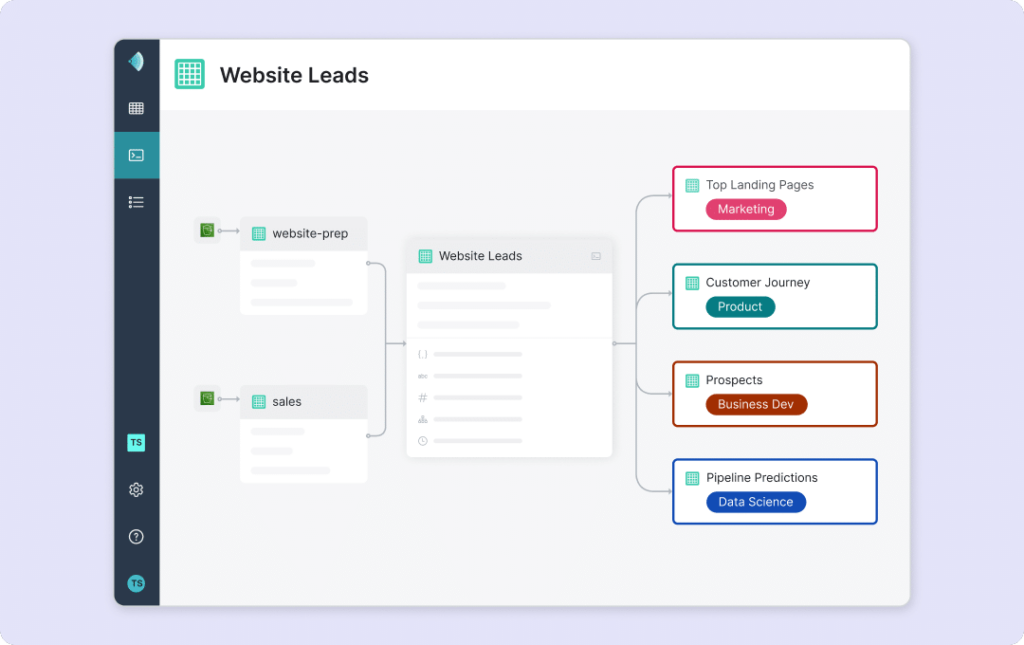
Consistent, collaborative data views in the language of business
Dremio Views make it easy to collaborate on data and analytics projects. You can build and share flexible views across all of your in the cloud, across clouds, or on-premise with just a few clicks - and, because Dremio analyzes your data where it lives, with no data movement. All views can also be governed, so it's easy to securely share and collaborate organization-wide.
Learn more about data and project collaboration with Views ‑>
SQL authoring for developers and analysts
Generate, edit, and manage SQL using code and no-code tools. SQL developers can write SQL using SQL prompts or directly in the Dremio SQL Runner. Intuitive drag-and-drop tools make it easy for non-SQL writers to quickly generate SQL queries across all data. Queries and views can be easily saved, governed, and shared.
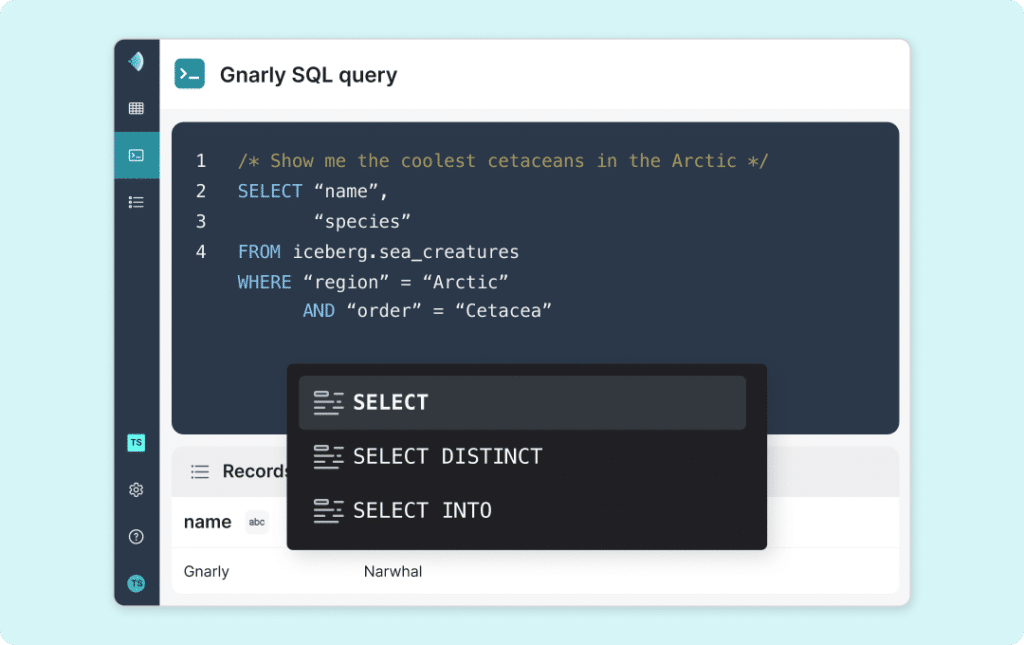
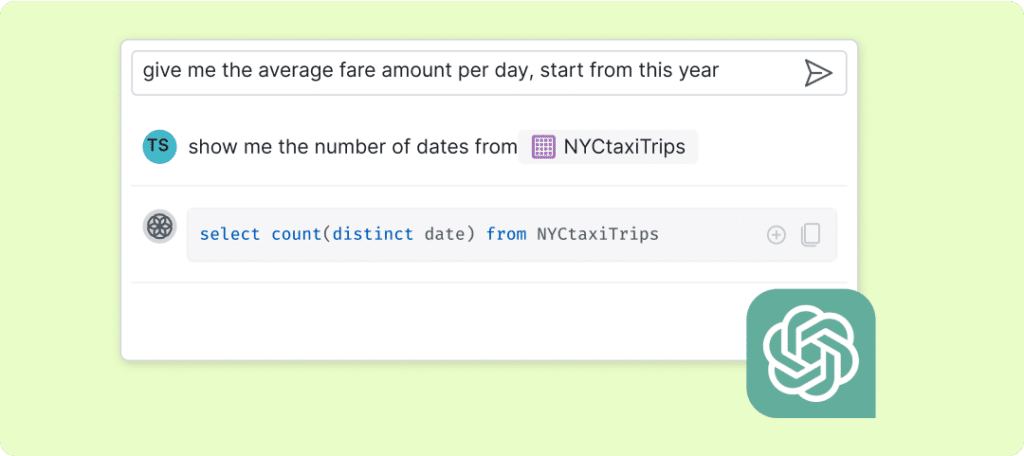
A query as easy as a question with text-to-SQL using generative AI
Harness the power of generative AI for seamless data analysis. Dremio's text-to-SQL capabilities allows anyone to write queries using natural language, making it easier and more intuitive to interact with the data. Type a simple question, and Dremio generates fast, accurate SQL to query any of your data.
Your business intelligence tools your way
Analyze your data with your preferred BI tools. Dremio's one-click Tableau and Power BI integrations let you build dashboards in seconds. Dremio also connects to BI tools via ODBC and JDBC connection. Data scientists can analyze data with integrated Jupyter notebooks. And, no matter how you analyze your data, you'll never need cubes, extracts, or imports.
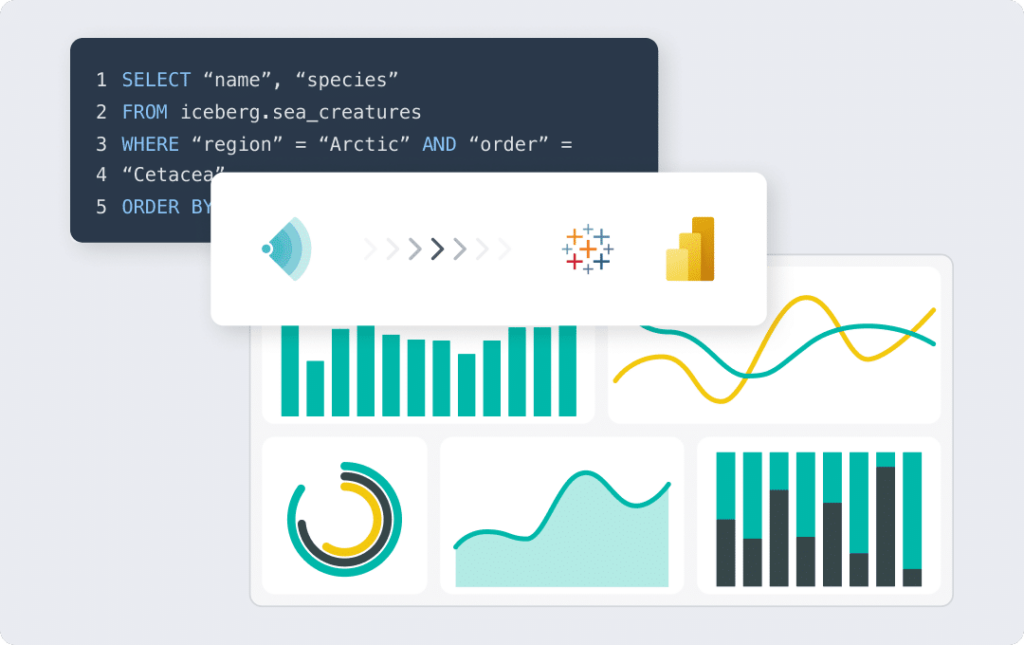
How Dremio supports leading organizations with self-service data analysis

Case Study
Improved Supply Chain with >10x Query Performance and 90% Faster Project Delivery
Dremio's data lakehouse helped Amazon achieve 10x faster query performance and reduce project completion times by 90%.
Learn more

Case Study
Improved Manufacturing Equipment Productivity and Lowered Costs
Improved Equipment Effectiveness by >10% across 250 manufacturing lines. Query price performance was 30x better, which resulted in significant...
Learn more

Case Study
Improved Project Delivery Speed and Lowered Costs.
Dremio's data lakehouse helps NCR complete analytics projects 90% faster and delivers >10x price performance.
Learn more
FAQs
Frequently asked questions
Self-service analytics allows business users to explore data, create reports, and run queries without needing help from IT or data engineering. It puts data access and discovery directly in the hands of analysts, product managers, and domain experts.
A self-service data platform enables users to access and query enterprise data without writing complex code or waiting on data teams. It combines governed access, a semantic layer, and intuitive tools for search and analysis. Dremio is a self-service platform that supports live queries, semantic modeling, and AI-ready access to all your data.
Self-service data access speeds up decision-making and reduces bottlenecks. It lets users find answers on their own without waiting in line for custom dashboards or data exports. For organizations, this means faster insights, less strain on engineering, and more value from existing data.
Key challenges include inconsistent data definitions, siloed access, performance issues, and lack of governance. Without a unified platform, self-service often leads to duplicated logic and unreliable results. Dremio solves this with a centralized semantic layer, secure access controls, and fast, federated queries.
Start with clean, well-modeled data. Use a semantic layer to standardize logic. Provide secure, role-based access. Offer intuitive tools that work with SQL, natural language, and visual interfaces. And choose a platform like Dremio that supports both BI and AI use cases out of the box.
Popular tools include Dremio, Tableau, Power BI, Looker, and ThoughtSpot. Dremio stands out by combining live data access, semantic modeling, and open-source foundations—all without ETL. It connects directly to cloud, lake, and warehouse data in real time.
Yes, Tableau is a leading self-service BI tool. It lets users build dashboards and explore data visually. However, it still depends on the data platform underneath. For live, governed access across all sources, Tableau users often pair it with Dremio.
Look for open architecture, zero-ETL access, a semantic layer for consistent logic, and real-time performance. The best platforms also support natural language search, security controls, and integration with your existing tools. Dremio checks all these boxes.
Examples include Dremio, Google BigQuery UI, AWS Athena, and Apache Superset. Dremio adds value by unifying all sources, applying semantic logic, and delivering fast queries without copying data.
Implementation time varies. With Dremio, teams can connect data sources and begin querying within hours. Full rollouts with governance, semantic modeling, and tool integrations can take days to weeks, depending on data complexity and team size.