Analytics and data unification platform
Break down silos and eliminate manual data engineering with Dremio’s Intelligent Lakehouse Platform, delivering unified data access, a universal semantic layer, and self-service analytics so every user can move from data to insight, faster.
Companies Modernizing with Dremio’s Lakehouse


























































Why top enterprises are choosing Dremio for unified data and analytics

Data unification with immediate value
- Phased implementation: Connect data sources, speed workloads, no disruption
- Gradual data unification: Progressive migration with immediate value

Maersk scaled to 1.6 million queries/day with Dremio, delivering real-time analytics 5,000+ users, reducing downtime to just 0.03%.

Cost optimization and performance acceleration
- Reduce costs: Unify data silos, eliminate duplicates, decouple storage and compute
- Optimize resources: Single lakehouse platform for all analytics workloads
Vanguard unified data across business units with Dremio, enabling governed self-service analytics, cutting analysis time from weeks to hours, and lowering costs.

Open architecture and future-proof flexibility
- Open lakehouse: Migrate from proprietary formats to Apache Iceberg for flexibility and no vendor lock-in
- Easy integration: Connect seamlessly with preferred analytics and BI tools

NetApp migrated to Dremio’s lakehouse, cutting compute costs by 60%, running 20x faster queries, and saving 30% in total cost.

Unified analytics for all workloads
- Unified analytics platform: Support BI, data science, ML, and AI workloads in one place
- Enable collaboration: Eliminate silos, trusted data for all teams, faster innovation
ABC Supply provided easy and fast access to 70+ data sources for 1,200 daily BI users to deliver self-service analytics.
OVERVIEW
From data silos to a unified analytics platform
Dremio’s data unification platform unifies and activates data across clouds, on-premises, SaaS, and external sources without ETL or data movement. Through universal semantic layer and query federation, it enables self-service analytics, accelerates insights, and fosters cross-team collaboration to drive innovation and business agility.
Autonomous optimization for AI and analytics
Experience the fastest lakehouse with zero manual tuning required. Dremio's intelligent query engine, part of its data unification platform, automatically optimizes performance for both AI agents and human users, delivering sub-second query performance through autonomous data structure creation, transparent query rewriting, and end-to-end caching—eliminating operational overhead so teams can focus on innovation.
Unified semantic layer with rich business context
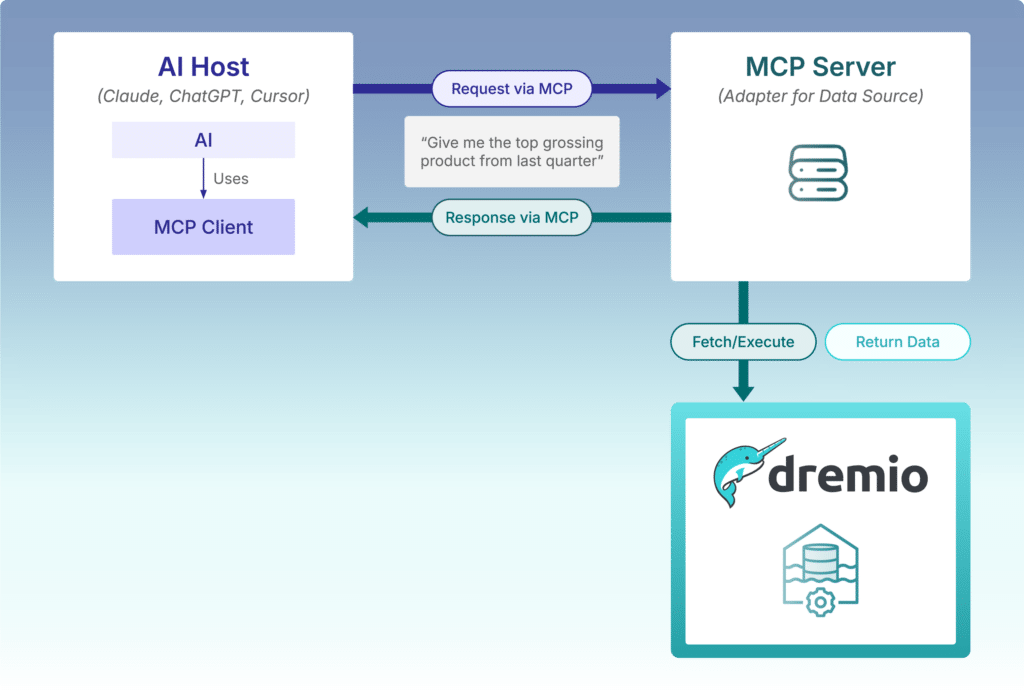
Enable AI agents and business users to understand and access data through natural language with Dremio's context-rich semantic layer. Built-in business vocabulary, semantic search, and automatic data discovery eliminate the guesswork, making enterprise data truly intelligent and accessible for both autonomous AI workflows and human-driven analytics.
Zero-ETL federation across all enterprise data
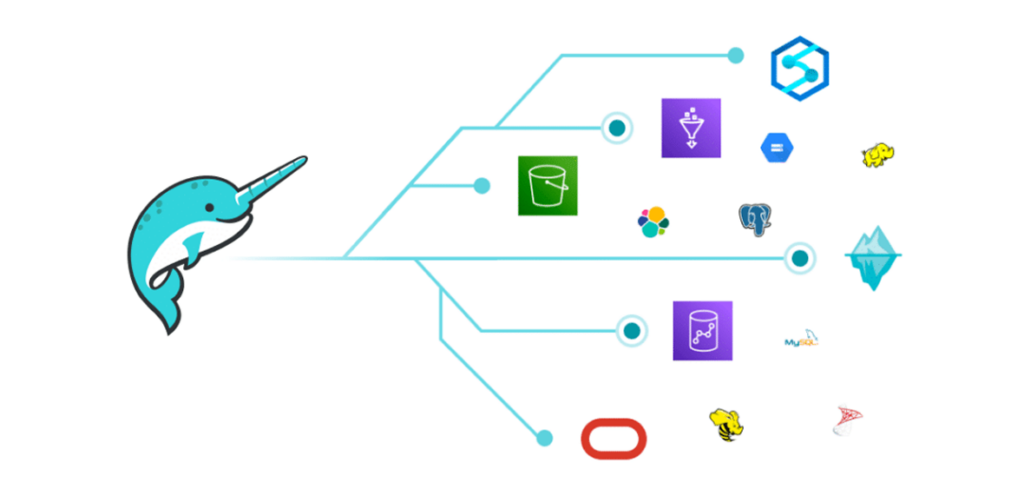
Connect AI agents and users to all enterprise data sources without ETL complexity or data movement. Dremio's universal data access provides real-time virtualization across cloud, on-premises, and SaaS systems through a single platform, breaking down silos and enabling autonomous data access for the agentic AI era.
Frictionless connectors and integrations across all your data, in the cloud and on-premises
Self-service analytics for the AI era
Empower both AI agents and human users to independently explore and analyze data using natural language and preferred tools. Dremio's semantic layer and MCP integration eliminate IT bottlenecks while providing the autonomous access patterns that modern AI workflows demand, accelerating time-to-insight across your organization.
Enterprise security and governance for agentic AI
Secure AI agent interactions and human data access with fine-grained controls, comprehensive audit trails, and centralized metadata management powered by Apache Polaris. Dremio’s data unification platform ensures compliant, governed data access for both autonomous AI workflows and traditional analytics across distributed teams and hybrid environments.
Dremio's Intelligent Lakehouse Platform: Unifying data for you
The Dremio Intelligent Lakehouse Platform empowers organizations to modernize their infrastructure without disruption while enabling faster decision-making through unified access to critical data sources.
Learn More About Dremio
Resources and documentation
Explore these guides, docs, and videos to learn how Dremio helps unify data, accelerate insight, and simplify your architecture.
Frequently asked questions
Data unification means bringing together data from multiple systems into a single, consistent view. For enterprises, this eliminates silos, reduces duplication, and ensures everyone works from the same source of truth. It enables faster decisions, better insights, and more accurate AI and analytics.
A retailer might store customer data in a CRM, order history in an ERP, and web behavior in a data lake. With data unification, all of this is combined into a single customer profile that supports marketing, sales, and support teams without duplicating or moving the data.
A unified data platform connects to all your data sources and makes them accessible through one interface. It models relationships, enforces access controls, and lets users query data in place. Dremio’s platform does this with zero-ETL federation, semantic modeling, and live access—no pipelines required.
- Data Ingestion: Connects and brings in data from different sources
- Storage: Manages data in formats like Apache Iceberg on object stores
- Processing: Prepares and transforms data for use
- Query Layer: Enables analytics, dashboards, and AI
- Governance & Semantics: Applies access controls and business logic
Dremio unifies all five layers into a single intelligent platform.
Look for open standards, support for all data sources, zero-ETL access, centralized governance, semantic modeling, and real-time performance. Dremio offers all of this, plus native support for AI agents and scalable access across hybrid environments.
Data integration moves and transforms data into one place, often using ETL pipelines. Data unification leaves data where it is but connects it through a shared model and interface. Integration is about movement. Unification is about access and consistency. Dremio uses federation to unify data without copying it.
A master data management (MDM) platform focuses on cleansing and standardizing core records like customers or products. A data unification platform connects all types of data and provides unified access for analytics and AI. MDM solves for accuracy. Unification solves for accessibility and speed.
Data warehouses centralize structured data for reporting. They require ETL and are optimized for batch analytics. Unified data platforms, like Dremio, connect to data anywhere—structured or not—and enable real-time access without data movement. Warehouses store data. Unified platforms connect it.
Challenges include inconsistent schemas, data duplication, siloed governance, and performance issues when querying live sources. Dremio solves this by using a universal semantic layer, zero-ETL federation, and intelligent caching to unify data without complexity.
Start with a clear semantic model. Use open formats like Apache Iceberg. Avoid unnecessary data movement. Apply consistent governance and access policies. Choose a platform like Dremio that supports real-time federation, scalability, and AI-ready semantics.


